Diabetes

Locking blood sugar disease with an interleukin therapy: Interleukin(IL-2)-based therapy for TIIDM: IL-2 increases the expression of IGF1R, INSR, and IRS2, and promotes an insulin-sensitized state, via up-regulation of  its target gene Lin28, 1/June/2018, 11.23 pm

Locking blood sugar disease with an interleukin therapy: Interleukin(IL-2)-based therapy for TIIDM: IL-2 increases the expression of IGF1R, INSR, and IRS2, and promotes an insulin-sensitized state, via up-regulation of  its target gene Lin28, 1/June/2018, 11.23 pm 960 720 Dr Boomi's Genom-2-Discovery Center

Introduction: What they say:   A study from the Stem Cell Transplantation Program, Division of Pediatric Hematology/Oncology, Boston Children’s Hospital and Dana-Farber Cancer Institute, Boston, Massachusetts, USA shows that “The Lin28/let-7 axis regulates glucose metabolism.” This study…

read more
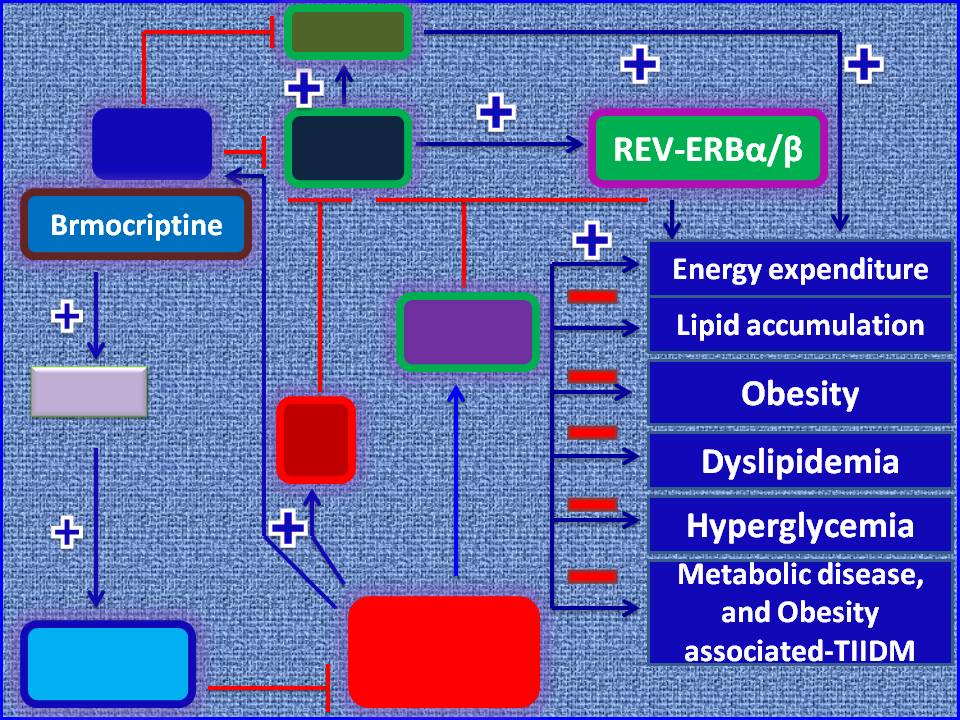
Unknown action of a known drug in body weight control, energy homeostasis and TIIDM:Bromocriptine (trade name:Parlodel), used in the treatment of  pituitary tumors, Parkinson’s disease (PD), hyperprolactinaemia, infertility and others, increases REV-ERB and its down stream target genes, inhibits lipid accumulation, improves dyslipidemia and insulin sensitivity, increases energy utilization, promotes weight loss and protects from diet-induced obesity and TIIDM, via up regulation of its target gene, 1/June/2018, 11.14 pm

Unknown action of a known drug in body weight control, energy homeostasis and TIIDM:Bromocriptine (trade name:Parlodel), used in the treatment of  pituitary tumors, Parkinson’s disease (PD), hyperprolactinaemia, infertility and others, increases REV-ERB and its down stream target genes, inhibits lipid accumulation, improves dyslipidemia and insulin sensitivity, increases energy utilization, promotes weight loss and protects from diet-induced obesity and TIIDM, via up regulation of its target gene, 1/June/2018, 11.14 pm 960 720 Dr Boomi's Genom-2-Discovery Center

Introduction: What they say A study from the Department of Molecular Therapeutics, The Scripps Research Institute, Jupiter, Florida 33458, USA shows that “Regulation of circadian behaviour and metabolism by synthetic…

read more

Locking blood sugar disease with an interleukin therapy: Interleukin(IL-15)-based therapy for TIIDM: IL-15 increases the expression of IGF1R, INSR, and IRS2, and promotes an insulin-sensitized state, via up-regulation of  its target gene Lin28, 1/May/2018, 10.33 pm

Locking blood sugar disease with an interleukin therapy: Interleukin(IL-15)-based therapy for TIIDM: IL-15 increases the expression of IGF1R, INSR, and IRS2, and promotes an insulin-sensitized state, via up-regulation of  its target gene Lin28, 1/May/2018, 10.33 pm 960 720 Dr Boomi's Genom-2-Discovery Center

Introduction: What they say:   A study from the Stem Cell Transplantation Program, Division of Pediatric Hematology/Oncology, Boston Children’s Hospital and Dana-Farber Cancer Institute, Boston, Massachusetts, USA shows that “The Lin28/let-7 axis regulates glucose metabolism.” This study…

read more

Interleukin-based therapy for glucose homeostasis and TIIDM: Interleukin-4 (IL-4) increases Pax6 and insulin expression, decreases the levels of glucagon, ghrelin and Somatostatin, reduces metabolic stress, improves insulin sensitivity, promotes glucose homeostasis and prevents progression to TIIDM via down regulation of its target gene, 30/May/2018, 6.11 am

Interleukin-based therapy for glucose homeostasis and TIIDM: Interleukin-4 (IL-4) increases Pax6 and insulin expression, decreases the levels of glucagon, ghrelin and Somatostatin, reduces metabolic stress, improves insulin sensitivity, promotes glucose homeostasis and prevents progression to TIIDM via down regulation of its target gene, 30/May/2018, 6.11 am 960 720 Dr Boomi's Genom-2-Discovery Center

Introduction: What they say A study from the Department of Developmental Biology and Cancer Research, The Institute for Medical Research Israel-Canada, The Hebrew University-Hadassah Medical School, Jerusalem, Israel shows that…

read more

A glycolipid comes to rescue of blood sugar disease: α-Galactosylceramide-based regenerative therapy for reversing diabetes:  α-Galactosylceramide (α-GalCer), a synthetic glycolipid derived from Agelas mauritanius, increases the expression of Sox17, Sox2, Pdx-1, and Ngn3, decreases mTOR expression, promotes regeneration of insulin-producing ß cells, increases insulin secretion, promotes glucose homeostasis and reverses T1D and T2D via down regulation of its target gene, 27/May/2018, 11.34 am

A glycolipid comes to rescue of blood sugar disease: α-Galactosylceramide-based regenerative therapy for reversing diabetes:  α-Galactosylceramide (α-GalCer), a synthetic glycolipid derived from Agelas mauritanius, increases the expression of Sox17, Sox2, Pdx-1, and Ngn3, decreases mTOR expression, promotes regeneration of insulin-producing ß cells, increases insulin secretion, promotes glucose homeostasis and reverses T1D and T2D via down regulation of its target gene, 27/May/2018, 11.34 am 960 720 Dr Boomi's Genom-2-Discovery Center

Introduction: What they say A study from the Longevity Institute, School of Gerontology, Department of Biological Sciences, University of Southern California, 3715 McClintock Avenue, Los Angeles, California, USA; and Koch Institute…

read more

A fibrous way to say no to Cardiomyopathy: β-glucan, found abundantly in oats and barley, decreases the expression of Sox6, restores the balance between slow- and fast-twitch myofiber proteins and alleviates Cardiomyopathy via up regulation of its target gene, 22/May/2018, 11.03 pm

A fibrous way to say no to Cardiomyopathy: β-glucan, found abundantly in oats and barley, decreases the expression of Sox6, restores the balance between slow- and fast-twitch myofiber proteins and alleviates Cardiomyopathy via up regulation of its target gene, 22/May/2018, 11.03 pm 960 720 Dr Boomi's Genom-2-Discovery Center

Introduction: What they say   A study from the Department of Cardiology, Boston Children’s Hospital, Harvard Medical School, Boston, Massachusetts, USA; and Harvard Stem Cell Institute, Harvard University, Cambridge, Massachusetts, USA shows that “Trbp regulates heart function through microRNA-mediated Sox6 repression.” This…

read more