

A recent study from the Yonsei University College of Medicine, Seoul, Korea shows that Sestrin2 suppresses Sepsis by inducing mitophagy and inhibiting NLRP3 activation. This study was published in the 2 August 2016 issue of the Journal “Autophagy” [the number one journal in autophagy with an impact factor of 10+] by Drs. Yoon JH, Kim MJ and others.
On the foundation of this interesting finding, Dr L Boominathan PhD, Director-cum-chief Scientist of GBMD, reports that: Natural product Antisepsis therapy: γ-Bisabolene, one of the components in Cardamom, Cubeb, lemon, Oregano, increases Sestrin2 expression, inhibits NLRP3 inflammasome activation, and pro-inflammatory cytokines secretion, induces mitophagy in macrophages, and clears damaged mitochondria via autophagic machinery, and protects the host from sepsis via up- regulation of its target gene

Figure 1 γ-Bisabolene, present in Cardamom, protects against Sepsis via up-regulation of Sestrin-2 and induction of mitophagy
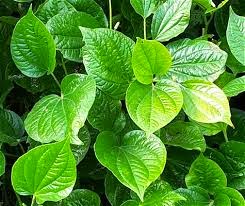
Cubeb-pepper-leaves contain γ-Bisabolene

Oregano contains γ-Bisabolene

γ-Bisabolene
Significance:
Given that: (1) molecular pathways and the mechanism of development of Sepsis is far from understood; (2) nearly 180 lakhs of people are affected by Sepsis each year globally; (3) the risk of death from Sepsis is anywhere from alarming 30% to 80%; (4) millions of deaths occur due to Sepsis each year globally; (5) Sepsis is the tenth leading cause of death globally; (6)
Sepsis is the second-leading cause of death in non-coronary intensive care unit patients; (7) global economic cost spent in the treatment of Sepsis is little more than 2 billion US dollars each year; & (8) more than 90% of cases are registered in developing countries—that cannot afford high-cost treatment —compared to developed countries, there is an urgent need to find: (i) a way to inhibit Sepsis-causing agents that promote activation of inflammasomes, and aberrant secretion of pro-inflammatory mediators; (ii) a cheaper alternative to the existing expensive drugs; and (iii) a side-effect-free-Natural product-based drug.
This study suggests a natural product-based therapy for Sepsis. γ-Bisabolene, by increasing the expression of its target gene, it may: (1) increase the expression of Sestrin-2; (2) decrease NLRP3 (NLR family, pyrin domain containing 3) inflammasome activation and pro-inflammatory mediators secretion; (3) promote perinuclear clustering and clearance of damaged mitochondria through induction of (a) SQSTM1 (Sequestosome 1) aggregation on the mitochondrial surface; (b) ULK1 (unc-51 like kinase 1) protein levels; and (c) mitophagy. Thereby, it may promote immunological homeostasis and protect the host from Sepsis. Together, pharmacological formulations encompassing “γ-Bisabolene or its analogue“ may be used to (1) enhance innate immunity against bacterial infections; and (2) treat Sepsis.
Idea Proposed/Formulated by: Dr L Boominathan Ph.D.
Web: http://genomediscovery.org or http://newbioideas.com
Terms & Conditions apply http://genomediscovery.org/registration/terms-and-conditions/
Citation: Boominathan, Natural product Antisepsis therapy: γ-Bisabolene, one of components in Cardamom, Cubeb, lemon, Oregano, increases Sestrin2 expression, inhibits NLRP3 inflammasome activation, and pro-inflammatory cytokines secretion, induces mitophagy in macrophages, and clears damaged mitochondria via autophagic machinery, and protects the host from sepsis via up- regulation of its target gene, 18/October/2016, 9.16 am, Genome-2-Bio-Medicine Discovery center (GBMD), http://genomediscovery.org
Courtesy: When you cite drop us a line at info@genomediscovery.org
# Research cooperation
Undisclosed information: How γ-Bisabolene: (1) increases the expression of Sestrin-2 ; and (2) enhances innate immunity against bacterial infection and Sepsis.
Amount: $300

Results-guaranteed-if-not-refunded