

Introduction: What they say:
A study from the Stem Cell Transplantation Program, Division of Pediatric Hematology/Oncology, Boston Children’s Hospital and Dana-Farber Cancer Institute, Boston, Massachusetts, USA shows that “The Lin28/let-7 axis regulates glucose metabolism.” This study was published in the 30 September 2011 issue of the Journal “Cell” [One of the best journals in Biological sciences with an I.F of 28.71] by Prof and Dean of the Harvard Medical School Daley George Q, Zhu H, and others.
What we say:
On the foundation of this interesting finding, Dr L Boominathan PhD, Director-cum-chief Scientist of GBMD, reports that: Molecular therapy for Regenerating the lost pancreatic β-cells in Diabetic patients: TCTP (Translationally controlled tumour protein) increases the expression of IGF1R, INSR, and IRS2, and promotes an insulin-sensitized state via up-regulation of its target gene
[easy_payment currency=”USD”]
From significance of the study to Public health relevance:
Given that: (1) more than 387 million people worldwide are affected by Diabetes mellitus (DM); (2) Diabetes is going to be one of the top 10 causes of death by 2030; (3) the life-long painful injection/drug treatment is required to treat DM; (3) the global economic cost spent for diabetes treatment in 2014 was little more than 600 billion US dollars, there is an urgent need to find: (i) a way to induce regeneration of adult ß-cells and cardiomyocytes that were lost in DM (Diabetes Mellitus) and MI (Myocardial infarction), respectively; (ii) a cheaper alternative to the existing expensive weight-loss drugs; (iii) a side-effect-free natural product-based drug; and (iv) a way to cure, not just treat, diabetes.
What is known?
Prof. Daley GQ and his research team members had shown earlier that loss of Lin28 in muscles promotes insulin resistance and glucose intolerance.
From Research findings to Therapeutic opportunity:
This study suggests, for the first time, that TCTP, by increasing the expression of its target genes such as Lin28B, IGF1R, INSR, IRS2 etc. (Fig. 1), it may: (1) enhance tissue repair; (2) promote youthful regenerative capacity; (3) promote insulin sensitivity; and (4) protect against dilated cardiomyopathy (DCM) (Fig.1).
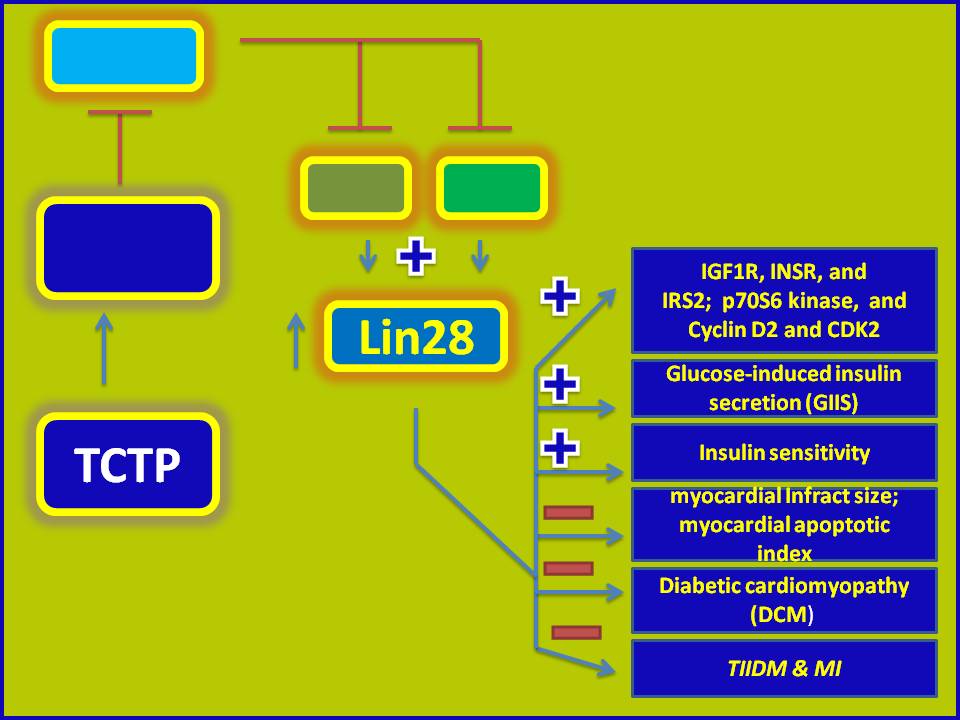
Figure 1. Mechanistic insights into how TCTP functions as an anti-diabetic and a cardioprotective agent. TCTP may promote insulin sensitivity and protect against myocardial infarction via up regulation of reprogramming protein Lin-28B
Thus, pharmacological formulations encompassing “TCTP activators either alone or in combination with other drugs” may be used to treat DM.
Details of the research findings:
Idea Proposed/Formulated (with experimental evidence) by:
Dr L Boominathan Ph.D.
Amount: $ 100#
Terms & Conditions apply http://genomediscovery.org/registration/terms-and-conditions/
Undisclosed mechanistic information: How does TCTP (Translationally controlled tumour protein) promote insulin-sensitized state?
# Research cooperation
References:
Web: http://genomediscovery.org or http://newbioideas.com/
Citation: Boominathan L, Molecular therapy for Regenerating the lost pancreatic β-cells in Diabetic patients: TCTP increases the expression of IGF1R, INSR, and IRS2, and promotes an insulin-sensitized state via up-regulation of its target gene, 16/March/2017, 3.25 pm, Genome-2-Bio-Medicine Discovery center (GBMD), http://genomediscovery.org
Courtesy: When you cite drop us a line at info@genomediscovery.org