


Introduction: What they say
A study from the The Jackson Laboratory, Bar Harbor, ME 04609, USA; Department of Ophthalmology, Tufts University of Medicine, Boston, MA 02111, USA; The Howard Hughes Medical Institute, Bar Harbor, ME 04609, USA shows that “Vitamin B3 modulates mitochondrial vulnerability and prevents glaucoma in aged mice.” This research paper was published, in the 9 February 2017 issue of the journal “Science” [One of the best research journals in “General science” with an I.F of 34.661], by Prof. Simon W. M. John and Pete A. Williams and others.
What we say:
On the foundation of this interesting finding, Dr L Boominathan PhD, Director-cum-chief Scientist of GBMD, reports that: Music-based therapy for glaucoma: Music increases Nmnat1 expression, increases NAD+ levels, improves neuronal dysfunction, and protects against glaucoma, via down regulation of its target gene

From significance of the study to public health relevance:
Given that: (1) Glaucoma is a neurodegenerative disease; (2) more than 80 million people worldwide are affected by Glaucoma; (2) Glaucoma is the second leading cause of blindness; (3) Glucosma has no cure; (4) vision lost due to glaucoma is irreversible; (5) the global economic cost spent for Glaucoma treatment is enormous, there is an urgent need to find: (i) a way to induce regeneration of ganglion cells that were lost in Glaucoma; (ii) a cheaper alternative to the existing expensive anti-glaucoma drugs; (iii) a side-effect-free natural product-based drug; and (v) a way to cure, not just treat, Glaucoma permanently.
What is known?
Prof.Simon’s research team has recently shown that:(1) glaucoma-prone mice suffer from mitochondrial abnormalities, resulting in neuronal dysfunction; (2) NAD+ levels decrease with age; (3) administration of Niacin/Vitamin-B3 protects against glaucoma; (4) expression of Nmnat1, a key NAD+-producing enzyme, protects against glaucoma, suggesting that increasing the expression of Nmnat1 in glaucoma patients may alleviate glaucoma.
From research findings to Therapeutic opportunity:
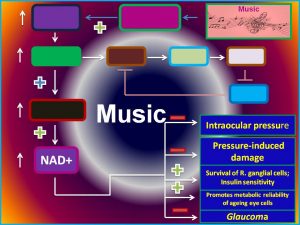
Figure 1. Music-based therapy for glaucoma. Music, by increasing the expression of its target gene, enhances NAD+ levels and improves glaucoma
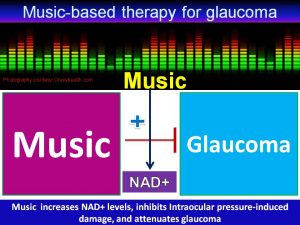
Figure 2. Music functions as an anti-glaucoma agent by increasing NAD+ levels
This study suggests, for the first time, that Music, by increasing the expression of their target gene, may increase the expression of Nmnat1. Thereby, it may: (1) increase NAD+ levels; (2) decrease Intraocular pressure; (3) improve pressure-induced damage; (4) increase insulin sensitivity; and (5) alleviate glaucoma (Fig.1).
Thus, music-based therapy, either alone or in combination with other drugs, may be used to treat Glaucoma.
Details of the research findings:
Idea Proposed/Formulated (with experimental evidence) by: Dr L Boominathan Ph.D.
Terms & Conditions apply http://genomediscovery.org/registration/terms-and-conditions/
Undisclosed mechanistic information: How music increase the levels of NAD+
Amount: $500#
# Research cooperation
For purchase and payment details, you may reach us at info@genomediscovery.org
References:
Web: http://genomediscovery.org or http://newbioideas.com
Terms & Conditions apply http://genomediscovery.org/registration/terms-and-conditions/
Citation: Boominathan, L., Music-based therapy for glaucoma: Music increases Nmnat1 expression, increases NAD+ levels, improves neuronal dysfunction, and protects against glaucoma, via down regulation of its target gene, 11/January/2019, 11.53 pm, Genome-2-Bio-Medicine Discovery center (GBMD), http://genomediscovery.org