

Idea Proposed/Formulated by: Dr L Boominathan PhD, Director-cum-chief Scientist of GBMD.
From research findings to Therapeutic opportunity:
Blue zone longevity diet, consumed by long-lived people from blue zone, such as Okinawa (Japan); Sardinia (Italy); Nicoya (Costa Rica); Icaria (Greece); and Loma Linda, California(USA), includes honey, consumed on a daily basis. However, how consumption of honey on a daily basis protects against common age-related diseases, including cardiovascular dysfunction, and thereby aids in extending the lifespan, mechanistically, is not clear up until now.
This study suggests, for the first time, that honey-derived compound chrysin promotes heart regeneration and protects against cardiac dysfunction.
Chrysin ( 5,7-Dihydroxyflavone), by suppressing the expression of its target gene tumor suppressor gene p38-α, it can: a) promote cardiomyocyte proliferation & regeneration and function; and b) augment stress resistance against hypoxic stress.

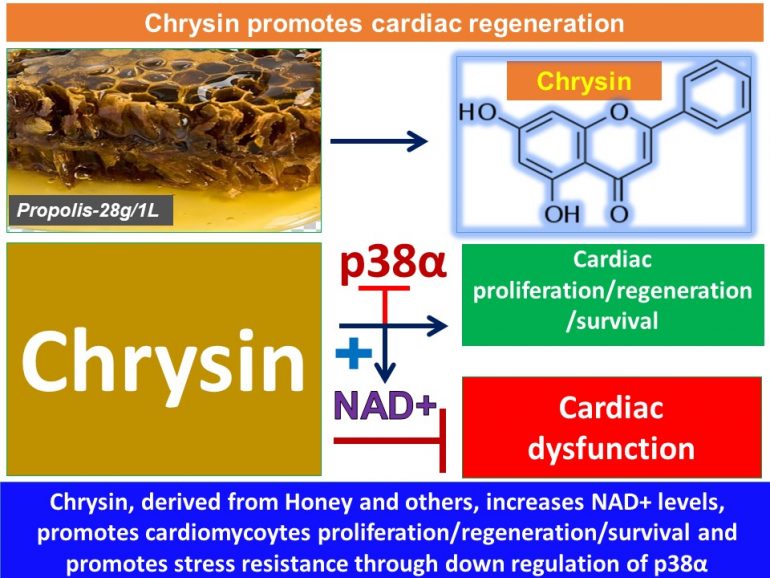
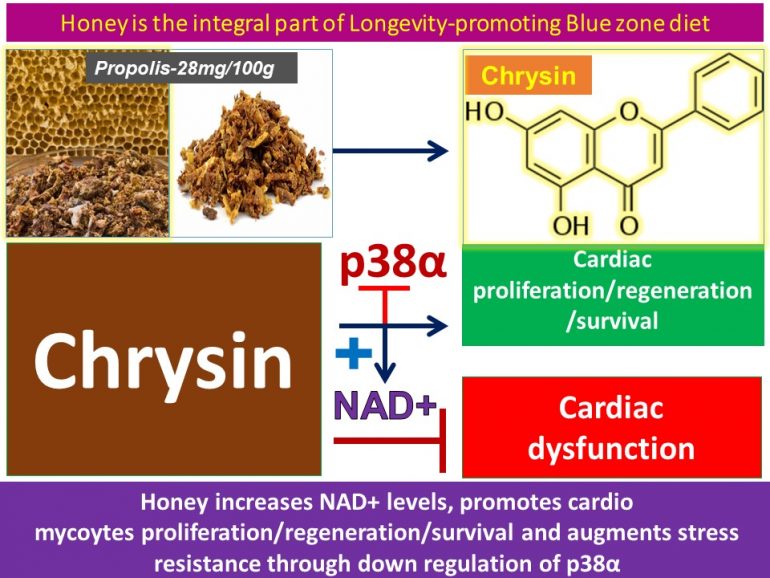
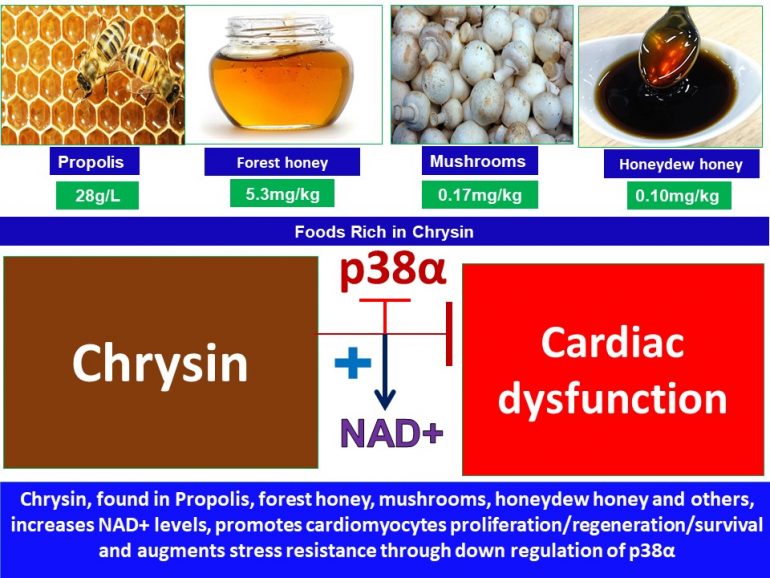

 Thus, pharmacological formulations encompassing "Chrysin         ( 5,7-Dihydroxyflavone) or its analogues, either alone or in combination with other drugs" can be used to promote cardiomyocyte proliferation & regeneration; and protect against cardiac dysfunction.
# Research cooperation
Undisclosed information: How does Chrysin suppress the expression of p38-α?
Terms & Conditions apply http://genomediscovery.org/registration/terms-and-conditions/
For more details on payment, you may reach us at admin@genomediscovery.org
References:
Citation: Boominathan, L., Mechanistic insights into how Blue zone longevity diet protects against cardiac dysfunction: Having honey on a daily basis will protect you against cardiac dysfunction and extend lifespan:Chrysin, found in propolis and honey, promotes heart regeneration and function and augments stress resistance against hypoxic stress through down regulation of p38-α, 20/February/2020, 8.10 pm, Genome-2-Bio-Medicine Discovery center (GBMD), http://genomediscovery.org
Web: http://genomediscovery.org
Courtesy: When you cite drop us a line at info@genomediscovery.org