Cancer

Molecular therapy for glioblastoma: Dihydromyricetin (DHM), isolated from Ampelopsis Grossedentata, inhibits the expression of JMJD6, impairs functioning of transcription elongation machinery, inhibits the proliferation of glioblastoma cells, suppresses tumor cell migration, reduces metastasis and prolongs survival via down regulation of its target gene, 23/July/2017, 12.00 am

Molecular therapy for glioblastoma: Dihydromyricetin (DHM), isolated from Ampelopsis Grossedentata, inhibits the expression of JMJD6, impairs functioning of transcription elongation machinery, inhibits the proliferation of glioblastoma cells, suppresses tumor cell migration, reduces metastasis and prolongs survival via down regulation of its target gene, 23/July/2017, 12.00 am 960 720 Dr Boomi's Genom-2-Discovery Center

Introduction: What they say: A study from the Department of Stem Cell Biology and Regenerative Medicine, Lerner Research Institute, Ohio, USA shows that “Transcription elongation factors represent in vivo cancer dependencies in glioblastoma.” This…

read more
Natural product-derived therapy for prostate cancer: Myrtenal, one of the components of Cardamom, inhibits the expression of mTORC1 and its downstream target AMD1, dismantles mTORC1-AMD1 signaling network, decreases polyamine levels, and inhibits prostate cancer progression via up regualtion of its target gene, 22/July/2017, 11.57 pm

Natural product-derived therapy for prostate cancer: Myrtenal, one of the components of Cardamom, inhibits the expression of mTORC1 and its downstream target AMD1, dismantles mTORC1-AMD1 signaling network, decreases polyamine levels, and inhibits prostate cancer progression via up regualtion of its target gene, 22/July/2017, 11.57 pm 960 720 Dr Boomi's Genom-2-Discovery Center

Introduction: What they say: A study from CIC bioGUNE (Center for Cooperative Research in Biosciences), Bizkaia Technology Park, 801 Building, 48160 Derio, Spain shows that “mTORC1-dependent AMD1 regulation sustains polyamine metabolism in prostate cancer.” This…

read more

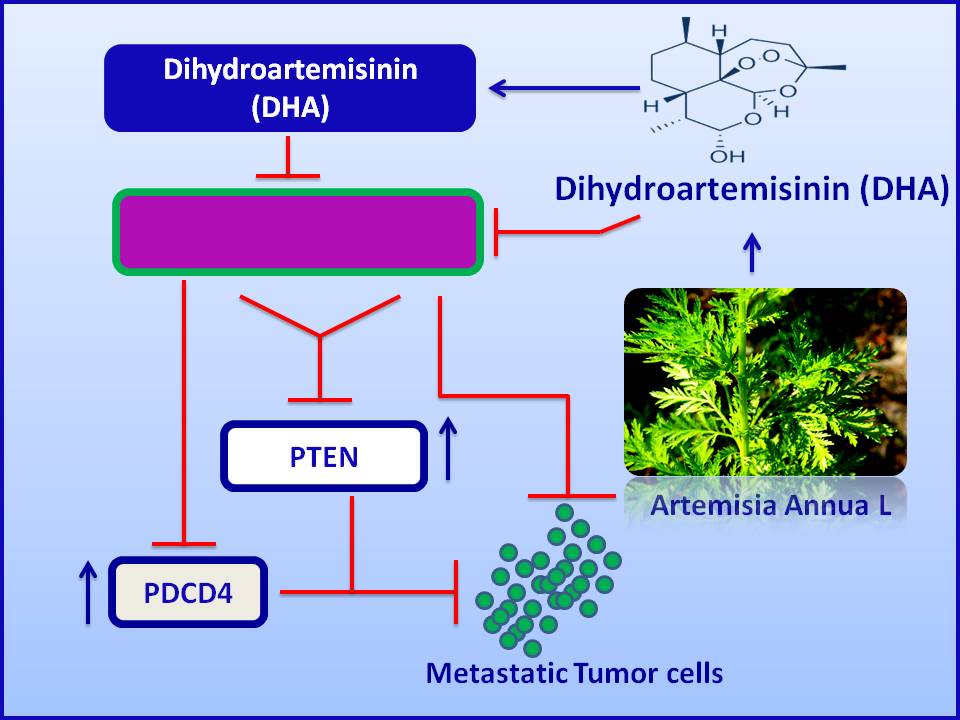
Natural product-derived therapy for Metastatic cancers: Dihydroartemisinin (DHA), a derivative of Artemisinin isolated from Artemisia Annua L, increases the expression of tumor promoters PTEN and PDCD4, inhibits cell cycle progression, and suppresses migration, invasion and metastasis of cancer cells via up regulation of its target gene, 22/June/2017, 12.57 am

Natural product-derived therapy for Metastatic cancers: Dihydroartemisinin (DHA), a derivative of Artemisinin isolated from Artemisia Annua L, increases the expression of tumor promoters PTEN and PDCD4, inhibits cell cycle progression, and suppresses migration, invasion and metastasis of cancer cells via up regulation of its target gene, 22/June/2017, 12.57 am 960 720 Dr Boomi's Genom-2-Discovery Center

From Significance of the study to Public health relevance: Given that: (i) each year nearly 14 million people are diagnosed with cancer globally, and little more than half of them will die; (ii) cancer…

read more

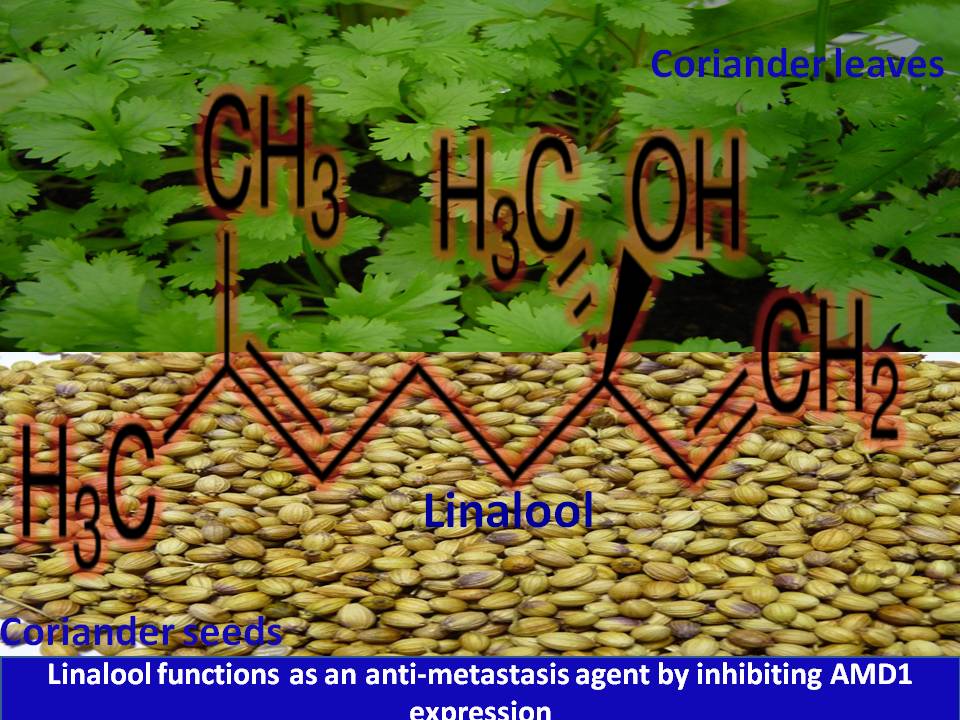
Natural product-derived therapy for prostate cancer: Linalool, one of the components of Coriander seeds, lavender and among others, inhibits the expression of mTORC1 and its downstream target AMD1, dismantles mTORC1-AMD1 signaling network, decreases polyamine levels, and inhibits prostate cancer progression via up regualtion of its target gene, 21/July/2017, 1.14 am

Natural product-derived therapy for prostate cancer: Linalool, one of the components of Coriander seeds, lavender and among others, inhibits the expression of mTORC1 and its downstream target AMD1, dismantles mTORC1-AMD1 signaling network, decreases polyamine levels, and inhibits prostate cancer progression via up regualtion of its target gene, 21/July/2017, 1.14 am 960 720 Dr Boomi's Genom-2-Discovery Center

Introduction: What they say: A study from CIC bioGUNE (Center for Cooperative Research in Biosciences), Bizkaia Technology Park, 801 Building, 48160 Derio, Spain shows that “mTORC1-dependent AMD1 regulation sustains polyamine metabolism in prostate cancer.” This…

read more

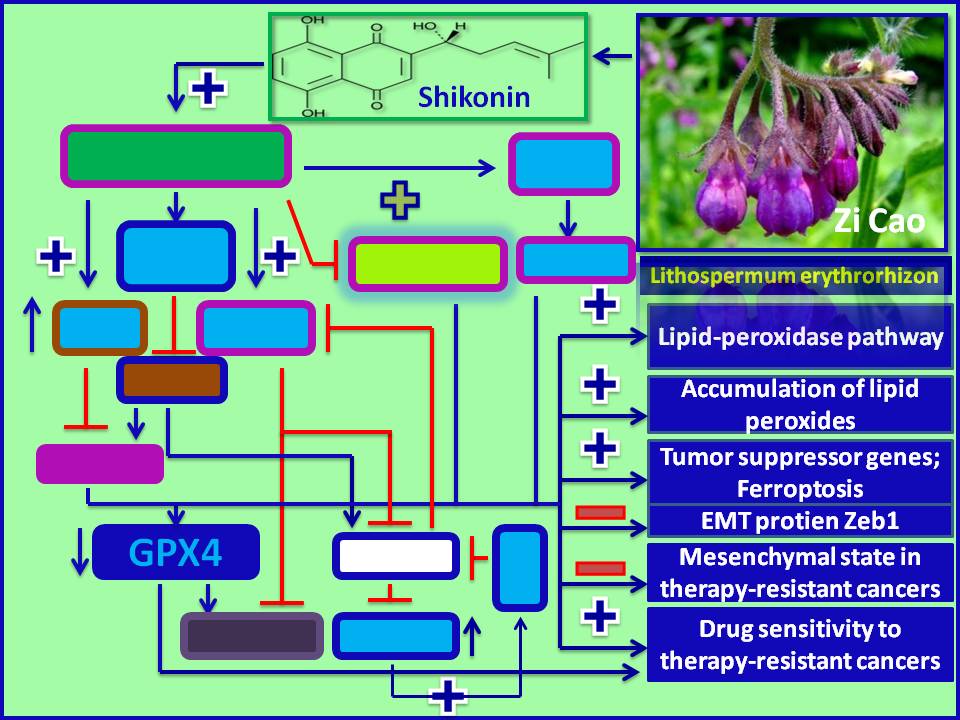
Natural product-derived therapy for therapy-resistant cancers: Shikonin, one of the components of Zicao, inhibits the expression of phospholipid glutathione peroxidase (GPX4), inhibits GPX4 signaling network and lipid peroxidase pathway, suppresses EMT protein ZEB1, increases sensitivity to anticancer therapy and prolongs survival via up regulation of its target gene, 21/July/2017, 1.00 am

Natural product-derived therapy for therapy-resistant cancers: Shikonin, one of the components of Zicao, inhibits the expression of phospholipid glutathione peroxidase (GPX4), inhibits GPX4 signaling network and lipid peroxidase pathway, suppresses EMT protein ZEB1, increases sensitivity to anticancer therapy and prolongs survival via up regulation of its target gene, 21/July/2017, 1.00 am 960 720 Dr Boomi's Genom-2-Discovery Center

Introduction: What they say: A study from Broad Institute, Cambridge, Massachusetts, USA, Howard Hughes Medical Institute, Chevy Chase, Maryland and Department of Chemistry and Chemical Biology, Harvard University, Oxford St., Cambridge,…

read more

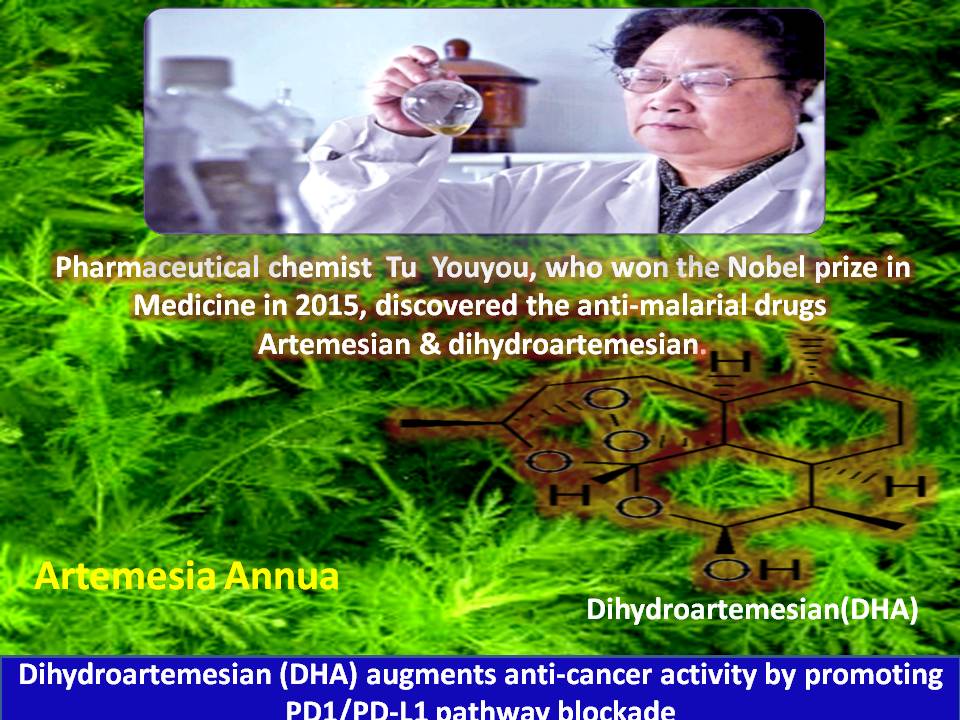
Natural product-derived PD-L1 pathway blockade enhances the efficacy of Cancer immunotherapy: Dihydroartemesian (DHA), a derivative of Artemesian isolated from Artemesia annua L., inhibits the expression of PD-L1, inhibits inflammatory signalling and the number of tumor-infiltrating lymphocytes and macrophages, increases Cytotoxic activity of T-cells, decreases tumor burden and increases survival via up-regulation of its target gene, 21/July/2017, 12.14 am

Natural product-derived PD-L1 pathway blockade enhances the efficacy of Cancer immunotherapy: Dihydroartemesian (DHA), a derivative of Artemesian isolated from Artemesia annua L., inhibits the expression of PD-L1, inhibits inflammatory signalling and the number of tumor-infiltrating lymphocytes and macrophages, increases Cytotoxic activity of T-cells, decreases tumor burden and increases survival via up-regulation of its target gene, 21/July/2017, 12.14 am 960 720 Dr Boomi's Genom-2-Discovery Center

Introduction:What they say: A recent study from Department of Molecular and Cellular Oncology, The University of Texas MD Anderson Cancer Center, Unit 108, 1515 Holcombe Boulevard, Houston, TX 77030, USA shows that “Deubiquitination and Stabilization of…

read more