Cardiac hypertrophy and fibrosis

A sweet way to stay free of cardiac diseases: Sugar-based Regenerative therapy for regaining the lost cardiomyocytes in Myocardial patients:  Trehalose, an artificial sweetener composed of two glucose molecules,  increases the expression of ERBB2/Her2 and promotes dedifferentiation  of cardiomyocytes, via up-regulation of its target gene, 26/March/2018, 10.29 pm

A sweet way to stay free of cardiac diseases: Sugar-based Regenerative therapy for regaining the lost cardiomyocytes in Myocardial patients:  Trehalose, an artificial sweetener composed of two glucose molecules,  increases the expression of ERBB2/Her2 and promotes dedifferentiation  of cardiomyocytes, via up-regulation of its target gene, 26/March/2018, 10.29 pm 960 720 Dr Boomi's Genom-2-Discovery Center

Introduction: What they say A recent study from the Department of Biological Regulation, Weizmann Institute of Science, Rehovot 76100, Israel shows that “ERBB2 triggers mammalian heart regeneration by promoting cardiomyocyte dedifferentiation and proliferation.” This study was published, in the 6 April…

read more
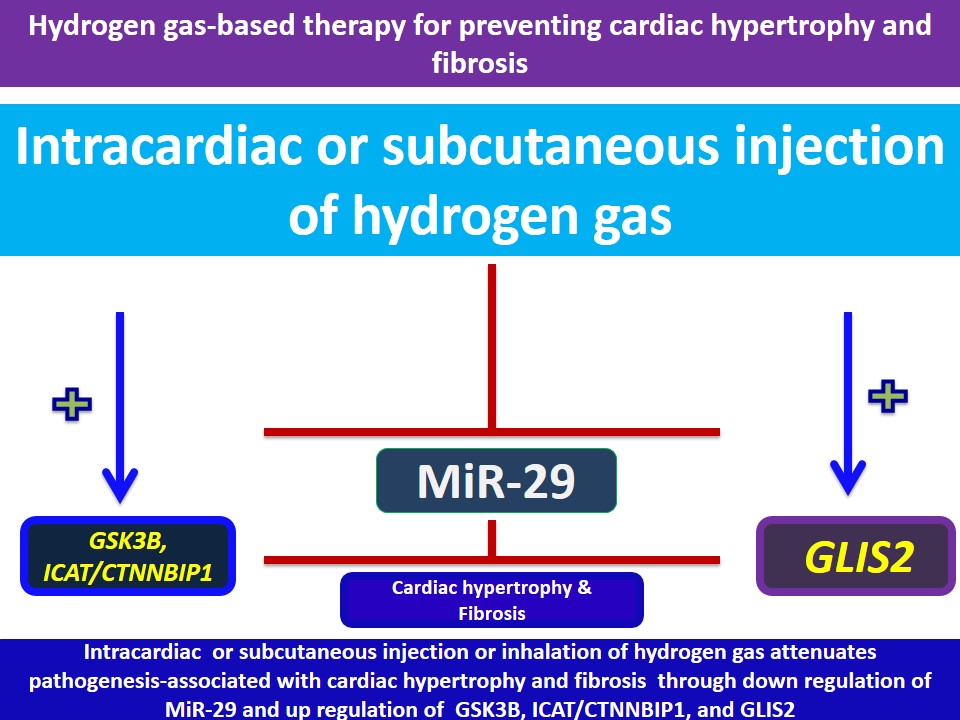
Intracardiac injection of Hydrogen gas protects against cardiac hypertrophy and fibrosis: Intracardiac or subcutaneous injection or inhalation of Hydrogen gas decreases MiR-29 expression, activates wnt- signaling and its components GSK3B, ICAT/CTNNBIP1, HBP1, and GLIS2, attenuates pathologic hypertrophy, inhibits fibrosis of the heart tissue, and improves cardiac function via upregulation of its target gene, 25/March/2019, 8.22 am

Intracardiac injection of Hydrogen gas protects against cardiac hypertrophy and fibrosis: Intracardiac or subcutaneous injection or inhalation of Hydrogen gas decreases MiR-29 expression, activates wnt- signaling and its components GSK3B, ICAT/CTNNBIP1, HBP1, and GLIS2, attenuates pathologic hypertrophy, inhibits fibrosis of the heart tissue, and improves cardiac function via upregulation of its target gene, 25/March/2019, 8.22 am 960 720 Dr Boomi's Genom-2-Discovery Center

Introduction: What they say:   A recent study from the Institute of Pharmacology and Toxicology, Technical University Munich (TUM), 80802, Munich, Germany; DZHK (German Center for Cardiovascular Research), partner site Munich…

read more

Ribonucleic acid-based therapy for cardiac hypertrophy and fibrosis: LncRNA ROR decreases MiR-29 expression, activates Wnt- signaling and its components GSK3B, ICAT/CTNNBIP1, HBP1 and GLIS2, attenuates pathologic hypertrophy, inhibits fibrosis of the heart tissue, and improves cardiac function, via upregulation of its target gene, 24/March/2019, 4.31 pm

Ribonucleic acid-based therapy for cardiac hypertrophy and fibrosis: LncRNA ROR decreases MiR-29 expression, activates Wnt- signaling and its components GSK3B, ICAT/CTNNBIP1, HBP1 and GLIS2, attenuates pathologic hypertrophy, inhibits fibrosis of the heart tissue, and improves cardiac function, via upregulation of its target gene, 24/March/2019, 4.31 pm 960 720 Dr Boomi's Genom-2-Discovery Center

Introduction: What they say: A recent study from the Institute of Pharmacology and Toxicology, Technical University Munich (TUM), 80802, Munich, Germany; DZHK (German Center for Cardiovascular Research), partner site Munich…

read more

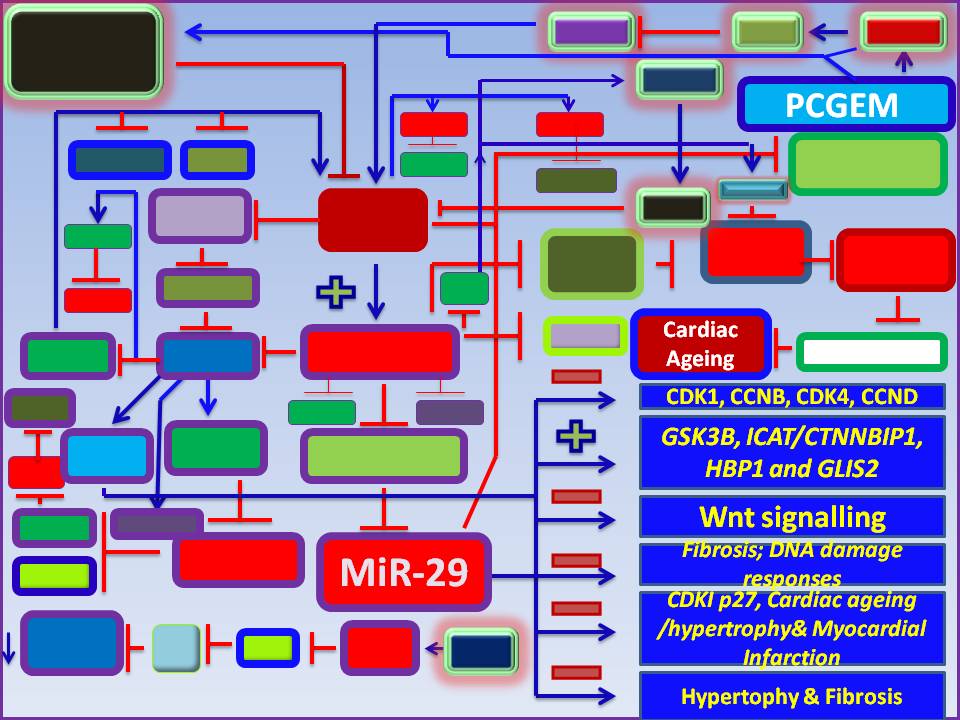
Ribonucleic acid-based therapy for cardiac hypertrophy and fibrosis: lncRNA PCGEM  decreases MiR-29 expression, activates Wnt- signaling and its components GSK3B, ICAT/CTNNBIP1, HBP1, and GLIS2, attenuates pathologic hypertrophy, inhibits fibrosis of the heart tissue, and improves cardiac function via upregulation of its target gene, 5/January/2019, 10.06 pm

Ribonucleic acid-based therapy for cardiac hypertrophy and fibrosis: lncRNA PCGEM  decreases MiR-29 expression, activates Wnt- signaling and its components GSK3B, ICAT/CTNNBIP1, HBP1, and GLIS2, attenuates pathologic hypertrophy, inhibits fibrosis of the heart tissue, and improves cardiac function via upregulation of its target gene, 5/January/2019, 10.06 pm 960 720 Dr Boomi's Genom-2-Discovery Center

Introduction: What they say: A recent study from the Institute of Pharmacology and Toxicology, Technical University Munich (TUM), 80802, Munich, Germany; DZHK (German Center for Cardiovascular Research), partner site Munich…

read more

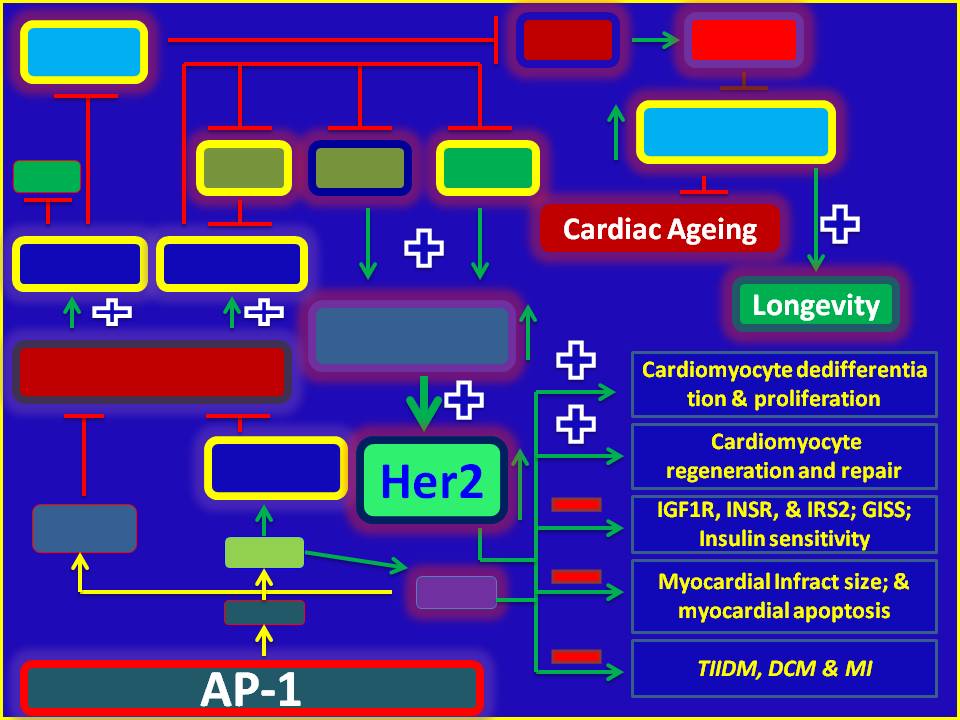
AP-1-based Regenerative therapy for regaining the lost cardiomyocytes in Myocardial patients: AP-1 (Activator protein-1) increases the expression of ERBB2/Her2 and promotes dedifferentiation  of cardiomyocytes, via up-regulation of its target gene, 13/December/2018, 11.16 pm

AP-1-based Regenerative therapy for regaining the lost cardiomyocytes in Myocardial patients: AP-1 (Activator protein-1) increases the expression of ERBB2/Her2 and promotes dedifferentiation  of cardiomyocytes, via up-regulation of its target gene, 13/December/2018, 11.16 pm 960 720 Dr Boomi's Genom-2-Discovery Center

Introduction: What they say A recent study from the Department of Biological Regulation, Weizmann Institute of Science, Rehovot 76100, Israel shows that “ERBB2 triggers mammalian heart regeneration by promoting cardiomyocyte dedifferentiation and proliferation.” This study was published, in the 6 April…

read more
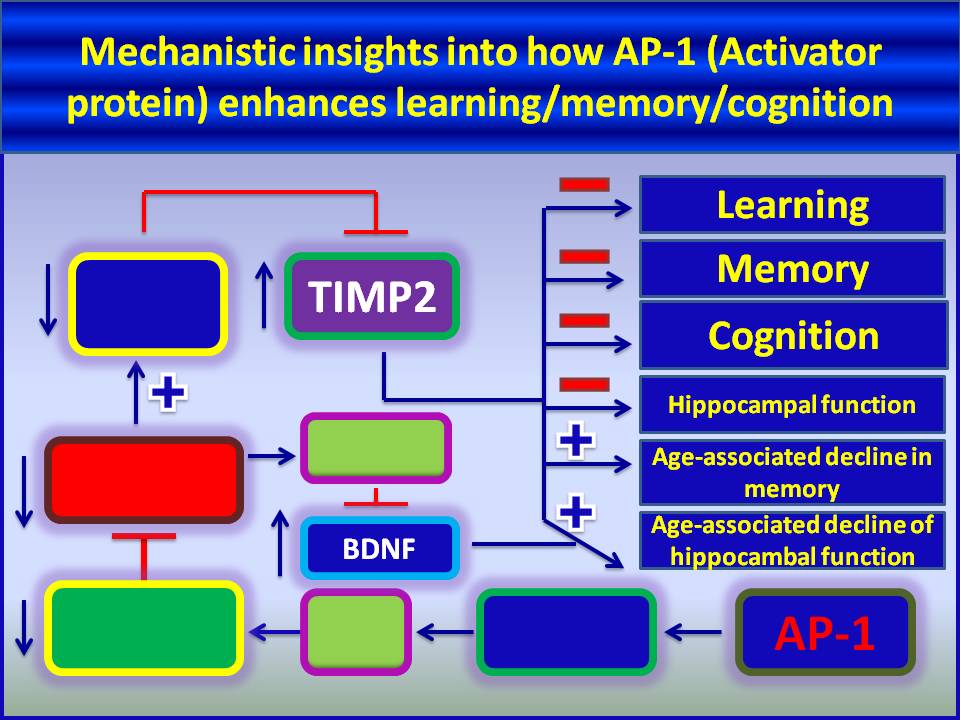
Molecular therapy for enhanced learning, memory, and cognitive ability: AP-1 (Activator protein-1), comprising c-Jun and c-fos and others, increases Tissue inhibitor of metalloproteinases 2 (TIMP2) levels, improves cognition, and decreases age-associated decline in memory and learning, via down-regulation of its target genes, 28/November/2018, 1.25 pm

Molecular therapy for enhanced learning, memory, and cognitive ability: AP-1 (Activator protein-1), comprising c-Jun and c-fos and others, increases Tissue inhibitor of metalloproteinases 2 (TIMP2) levels, improves cognition, and decreases age-associated decline in memory and learning, via down-regulation of its target genes, 28/November/2018, 1.25 pm 960 720 Dr Boomi's Genom-2-Discovery Center

Introduction: What they say: A study from Department of Neurology and Neurological Sciences, Stanford University School of Medicine, Stanford, California 94305, USA;  Paul F. Glenn Center for the Biology of…

read more