Heart attack

 Regenerative therapy for regaining the lost cardiomyocytes in Myocardial patients: Elafibranor (GFT505), an experimental drug for diabetes, insulin resistance, dyslipidemia, nonalcoholic steatohepatitis (NASH), increases the expression of ERBB2/Her2 and promotes dedifferentiation  of cardiomyocytes, via up-regulation of its target gene, 31/January/2018, 6.00 am

 Regenerative therapy for regaining the lost cardiomyocytes in Myocardial patients: Elafibranor (GFT505), an experimental drug for diabetes, insulin resistance, dyslipidemia, nonalcoholic steatohepatitis (NASH), increases the expression of ERBB2/Her2 and promotes dedifferentiation  of cardiomyocytes, via up-regulation of its target gene, 31/January/2018, 6.00 am 960 720 Dr Boomi's Genom-2-Discovery Center

Introduction: What they say A recent study from the Department of Biological Regulation, Weizmann Institute of Science, Rehovot 76100, Israel shows that “ERBB2 triggers mammalian heart regeneration by promoting cardiomyocyte dedifferentiation and proliferation.” This study was published, in the 6 April…

read more
Ribonucleic acid-based therapy for myocardial diseases: LncRNA TUG1-based therapy for Cardiac repair and myocardial infarction: LncRNA  TUG1 increases Agrin expression, activates Yap and ERK-mediated signaling,  replaces scar tissue with functional cardiomyocytes, and promotes cardiomyocyte regeneration and repair after myocardial infarction, via up-regulation of its target gene, 30/January/2018, 7.17 pm

Ribonucleic acid-based therapy for myocardial diseases: LncRNA TUG1-based therapy for Cardiac repair and myocardial infarction: LncRNA  TUG1 increases Agrin expression, activates Yap and ERK-mediated signaling,  replaces scar tissue with functional cardiomyocytes, and promotes cardiomyocyte regeneration and repair after myocardial infarction, via up-regulation of its target gene, 30/January/2018, 7.17 pm 960 720 Dr Boomi's Genom-2-Discovery Center

Introduction: What they say: A recent study from Department of Molecular Cell Biology, Weizmann Institute of Science, Rehovot 76100, Israel; Department of Biomedical Engineering, Duke University, Durham, North Carolina 27708,…

read more

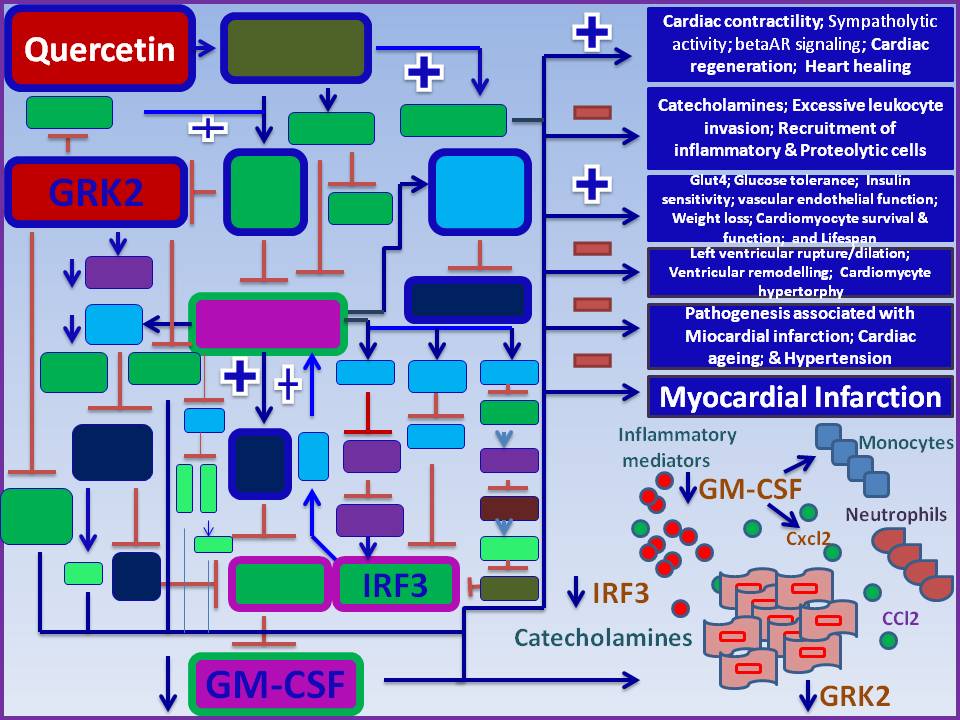
Natural product-based therapy for attenuating pathogenesis-associated with Myocardial infarction: Quercetin, isolated from elderberries, onion and others, decreases IRF3, GM-CSF (Granulocyte-macrophage colony-stimulating factor) and GRK2(G protein-coupled receptor kinase) expression, inhibits undue leucocyte activation and invasion, suppresses recruitment of inflammatory cells, inhibits ventricular dilation, and promotes heart repair and survival via upregulation of its target gene, 29/January/2018, 6.06 am

Natural product-based therapy for attenuating pathogenesis-associated with Myocardial infarction: Quercetin, isolated from elderberries, onion and others, decreases IRF3, GM-CSF (Granulocyte-macrophage colony-stimulating factor) and GRK2(G protein-coupled receptor kinase) expression, inhibits undue leucocyte activation and invasion, suppresses recruitment of inflammatory cells, inhibits ventricular dilation, and promotes heart repair and survival via upregulation of its target gene, 29/January/2018, 6.06 am 960 720 Dr Boomi's Genom-2-Discovery Center

Introduction: What they say: A recent study from Department of Systems Biology, Harvard Medical School, Boston, Massachusetts, USA; and Cardiovascular Research Center, Massachusetts General Hospital and Harvard Medical School, Boston,…

read more

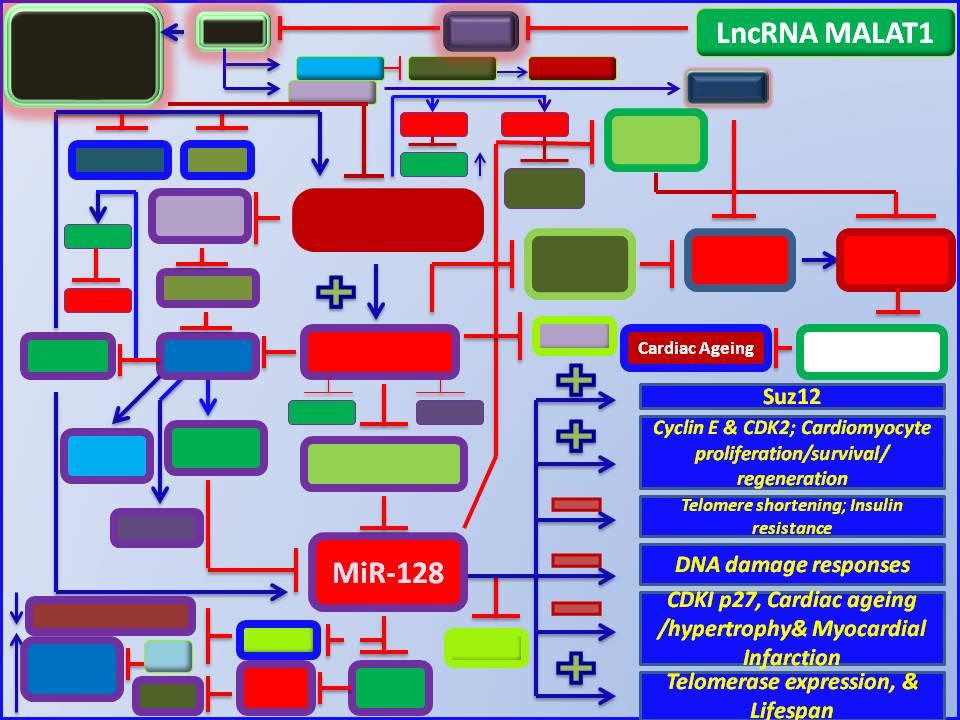
Ribonucleic acid-based therapy for cardiomyocyte proliferation and heart regeneration: LncRNA MALAT1 decreases tumor suppressor MiR-128 and cyclin-dependent kinase inhibitor p27 expression, increases SUZ12 expression, increases Cyclin E and CDK2 expression, promotes proliferation/re-entry of postnatal/adult cardiomyocytes, attenuates fibrosis, ameliorates cardiac dysfunction, and promotes heart repair in response to myocardial infarction, via up-regulation of its target gene, 26/January/2019, 11.33 pm

Ribonucleic acid-based therapy for cardiomyocyte proliferation and heart regeneration: LncRNA MALAT1 decreases tumor suppressor MiR-128 and cyclin-dependent kinase inhibitor p27 expression, increases SUZ12 expression, increases Cyclin E and CDK2 expression, promotes proliferation/re-entry of postnatal/adult cardiomyocytes, attenuates fibrosis, ameliorates cardiac dysfunction, and promotes heart repair in response to myocardial infarction, via up-regulation of its target gene, 26/January/2019, 11.33 pm 960 720 Dr Boomi's Genom-2-Discovery Center

Introduction: What they say: A recent study from Department of Pathology and Laboratory Medicine, University of Cincinnati College of Medicine, Cincinnati, OH, 45267, USA; Key Laboratory of Molecular Target and…

read more

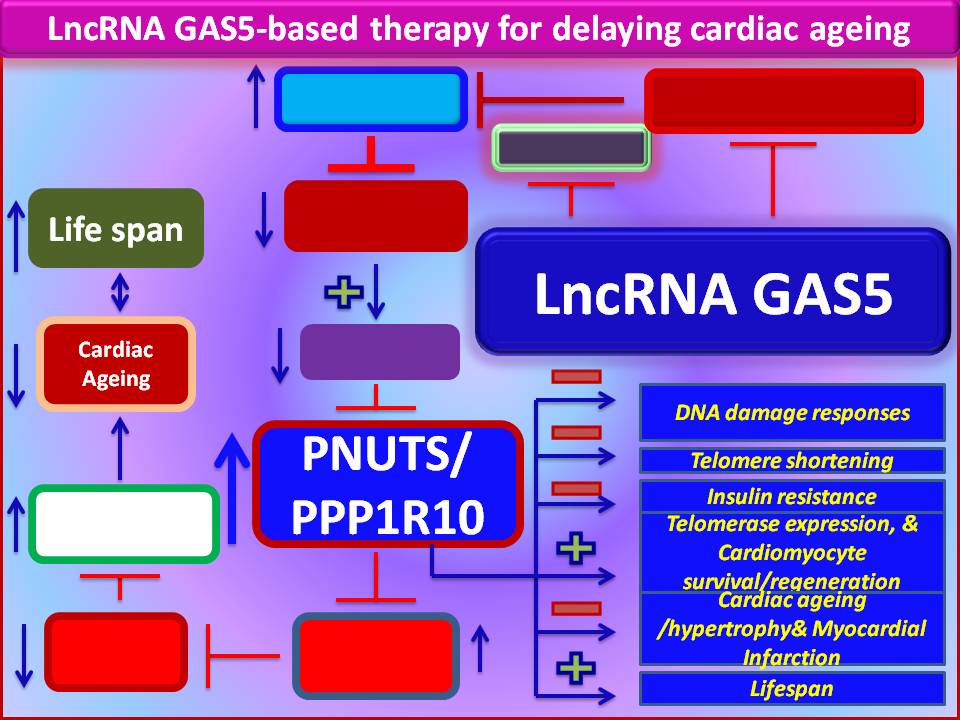
Ribonucleic acid-based therapy for Myocardial Infarction: LncRNA GAS5 inhibits DNA damage responses, induces telomerase expression, inhibits telomere shortening, and promotes cardiomyocyte survival after myocardial infarction, via up-regulation of PNUTS, 26/January/2019, 12.08 am

Ribonucleic acid-based therapy for Myocardial Infarction: LncRNA GAS5 inhibits DNA damage responses, induces telomerase expression, inhibits telomere shortening, and promotes cardiomyocyte survival after myocardial infarction, via up-regulation of PNUTS, 26/January/2019, 12.08 am 960 720 Dr Boomi's Genom-2-Discovery Center

What they say:  A recent study from the Institute for Cardiovascular Regeneration, Centre of Molecular Medicine, Frankfurt, Germany shows that “MicroRNA-34a regulates cardiac ageing and function.” This study was published, in the 7 March  2013 issue of of the journal Nature,  by Prof Dimmler,…

read more

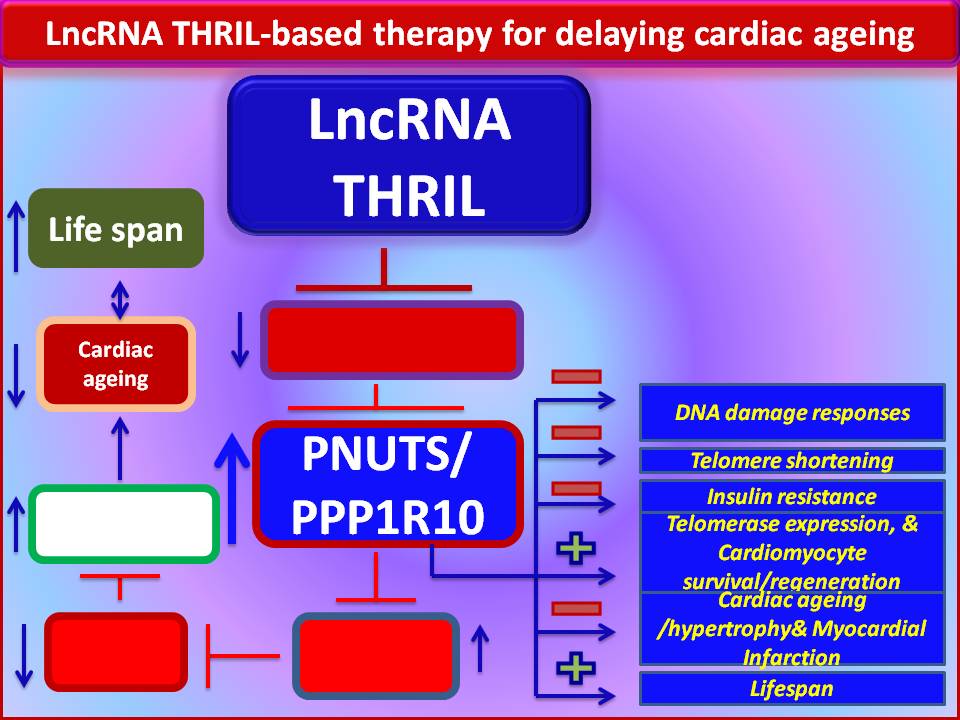
Ribonucleic acid-based therapy for Myocardial Infarction: LncRNA THRIL  inhibits DNA damage responses, induces telomerase expression, inhibits telomere shortening, and promotes cardiomyocyte survival after myocardial infarction, via up-regulation of PNUTS, 24/January/2019, 8.07 pm

Ribonucleic acid-based therapy for Myocardial Infarction: LncRNA THRIL  inhibits DNA damage responses, induces telomerase expression, inhibits telomere shortening, and promotes cardiomyocyte survival after myocardial infarction, via up-regulation of PNUTS, 24/January/2019, 8.07 pm 960 720 Dr Boomi's Genom-2-Discovery Center

What we say:  Dr L Boominathan PhD, Director-cum-chief Scientist of GBMD, reports that: Ribonucleic acid-based therapy for Myocardial Infarction: LncRNA THRIL  inhibits DNA damage responses, induces telomerase expression, inhibits telomere shortening, and promotes cardiomyocyte…

read more