Heart attack

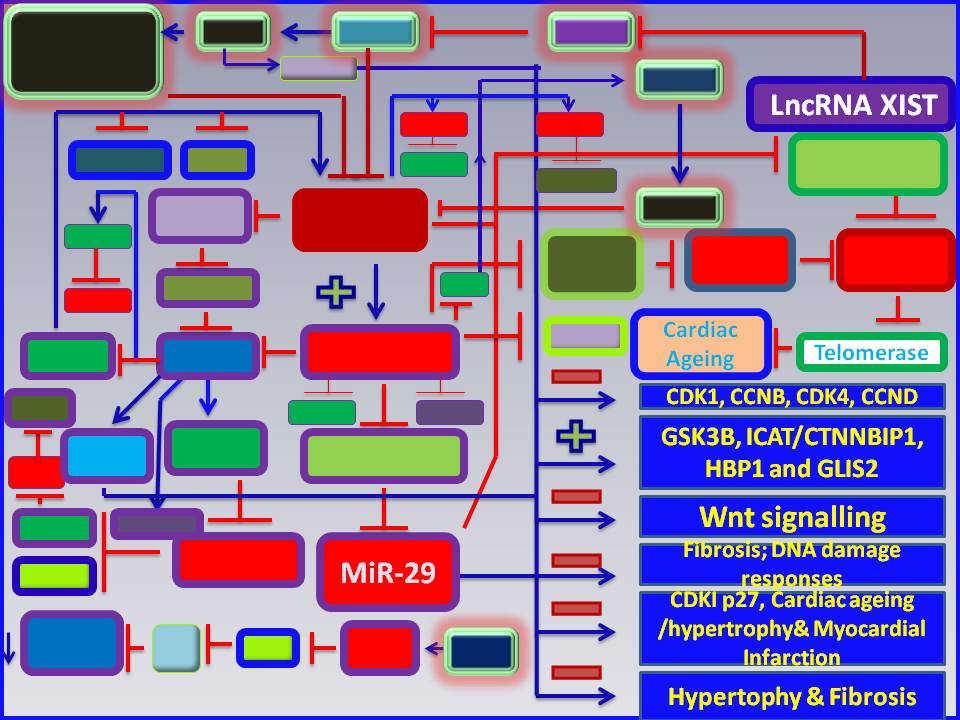
Ribonucleic acid-based therapy for cardiomyocyte proliferation and heart regeneration: LncRNA XIST decreases tumor suppressor MiR-128 and cyclin-dependent kinase inhibitor p27 expression, increases SUZ12 expression, increases Cyclin E and CDK2 expression, promotes proliferation/re-entry of postnatal/adult cardiomyocytes, attenuates fibrosis, ameliorates cardiac dysfunction, and promotes heart repair in response to myocardial infarction, via up regulation of its target gene, 12/January/2018, 8.11 am

Ribonucleic acid-based therapy for cardiomyocyte proliferation and heart regeneration: LncRNA XIST decreases tumor suppressor MiR-128 and cyclin-dependent kinase inhibitor p27 expression, increases SUZ12 expression, increases Cyclin E and CDK2 expression, promotes proliferation/re-entry of postnatal/adult cardiomyocytes, attenuates fibrosis, ameliorates cardiac dysfunction, and promotes heart repair in response to myocardial infarction, via up regulation of its target gene, 12/January/2018, 8.11 am 960 720 Dr Boomi's Genom-2-Discovery Center

Introduction: What they say: A recent study from Department of Pathology and Laboratory Medicine, University of Cincinnati College of Medicine, Cincinnati, OH, 45267, USA; Key Laboratory of Molecular Target and…

read more
Ribonucleic acid-based therapy for Myocardial Infarction: LncRNA ADAM12 inhibits DNA damage responses, induces telomerase expression, inhibits telomere shortening, and promotes cardiomyocyte survival after myocardial infarction, via up-regulation of PNUTS, 12/January/2019, 7.40 am

Ribonucleic acid-based therapy for Myocardial Infarction: LncRNA ADAM12 inhibits DNA damage responses, induces telomerase expression, inhibits telomere shortening, and promotes cardiomyocyte survival after myocardial infarction, via up-regulation of PNUTS, 12/January/2019, 7.40 am 960 720 Dr Boomi's Genom-2-Discovery Center

What they say:  A recent study from the Institute for Cardiovascular Regeneration, Centre of Molecular Medicine, Frankfurt, Germany shows that “MicroRNA-34a regulates cardiac ageing and function.” This study was published, in the 7 March  2013 issue of of the journal Nature,  by Prof Dimmler,…

read more

Ribonucleic acid-based therapy for cardiac hypertrophy and fibrosis: LncRNA XIST decreases MiR-29 expression, activates Wnt- signaling and its components GSK3B, ICAT/CTNNBIP1, HBP1 and GLIS2, attenuates pathologic hypertrophy, inhibits fibrosis of the heart tissue, and improves cardiac function via upregulation of its target gene, 11/January/2019, 11.58 pm

Ribonucleic acid-based therapy for cardiac hypertrophy and fibrosis: LncRNA XIST decreases MiR-29 expression, activates Wnt- signaling and its components GSK3B, ICAT/CTNNBIP1, HBP1 and GLIS2, attenuates pathologic hypertrophy, inhibits fibrosis of the heart tissue, and improves cardiac function via upregulation of its target gene, 11/January/2019, 11.58 pm 960 720 Dr Boomi's Genom-2-Discovery Center

Introduction: What they say: A recent study from the Institute of Pharmacology and Toxicology, Technical University Munich (TUM), 80802, Munich, Germany; DZHK (German Center for Cardiovascular Research), partner site Munich…

read more

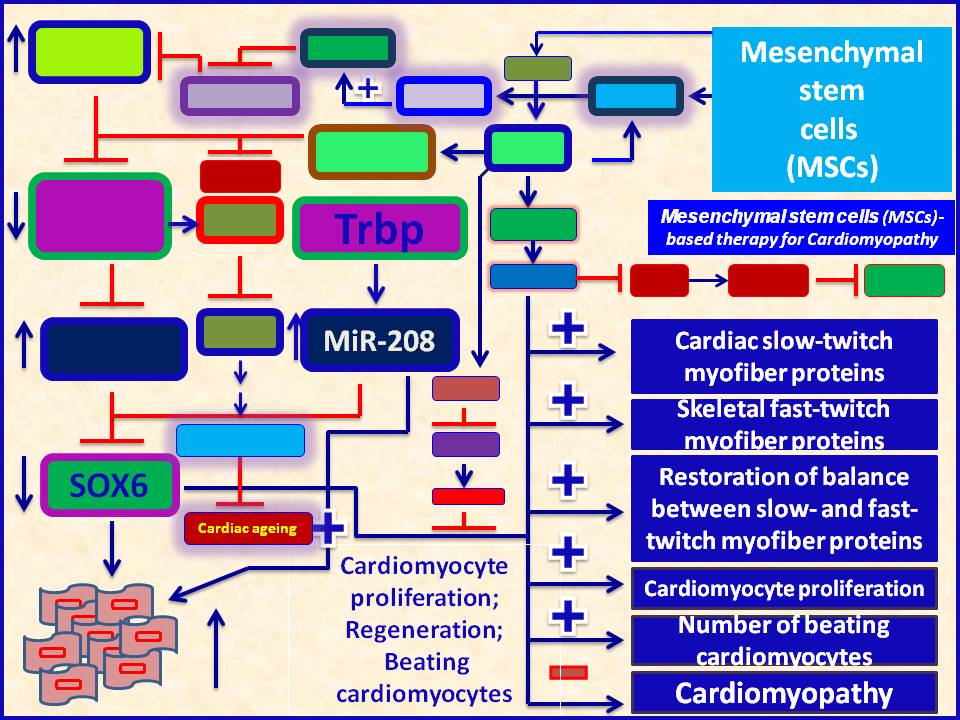
Mesenchymal stem cell-based therapy for Cardiomyopathy: Mesenchymal stem cells (MSCs) decrease the expression of Sox6, restore the balance between slow- and fast-twitch myofiber proteins and alleviate Cardiomyopathy, via upregulation of its target gene, 11/January/2019,  11.07 pm

Mesenchymal stem cell-based therapy for Cardiomyopathy: Mesenchymal stem cells (MSCs) decrease the expression of Sox6, restore the balance between slow- and fast-twitch myofiber proteins and alleviate Cardiomyopathy, via upregulation of its target gene, 11/January/2019,  11.07 pm 960 720 Dr Boomi's Genom-2-Discovery Center

Introduction: What they say A recent study from the Department of Cardiology, Boston Children’s Hospital, Harvard Medical School, Boston, Massachusetts, USA; and Harvard Stem Cell Institute, Harvard University, Cambridge, Massachusetts, USA shows that “Trbp regulates heart function through microRNA-mediated Sox6 repression.” This…

read more

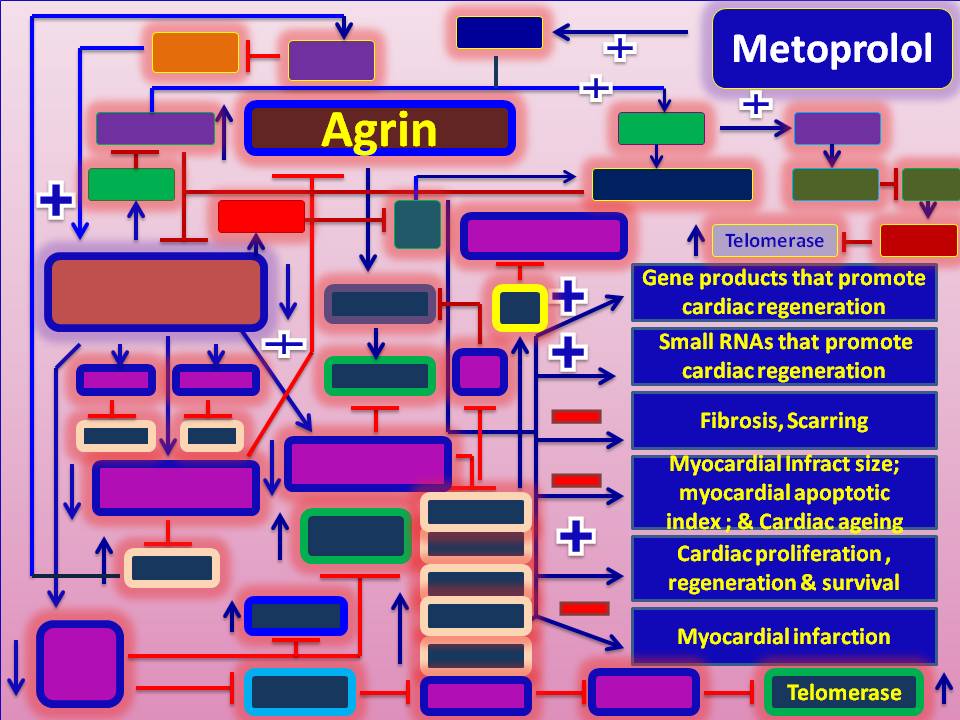
Molecular therapy for heart regeneration and repair:  Metoprolol (trade name: Lopressor), used to treat high blood pressure and heart pain, increases Agrin expression, activates Yap and ERK-mediated signaling,  replaces scar tissue with functional cardiomyocytes, and promotes cardiomyocyte regeneration and repair after myocardial infarction, via up regulation of its target gene, 11/January/2017, 10.24 pm

Molecular therapy for heart regeneration and repair:  Metoprolol (trade name: Lopressor), used to treat high blood pressure and heart pain, increases Agrin expression, activates Yap and ERK-mediated signaling,  replaces scar tissue with functional cardiomyocytes, and promotes cardiomyocyte regeneration and repair after myocardial infarction, via up regulation of its target gene, 11/January/2017, 10.24 pm 960 720 Dr Boomi's Genom-2-Discovery Center

Introduction: What they say: A recent study from Department of Molecular Cell Biology, Weizmann Institute of Science, Rehovot 76100, Israel; Department of Biomedical Engineering, Duke University, Durham, North Carolina 27708,…

read more

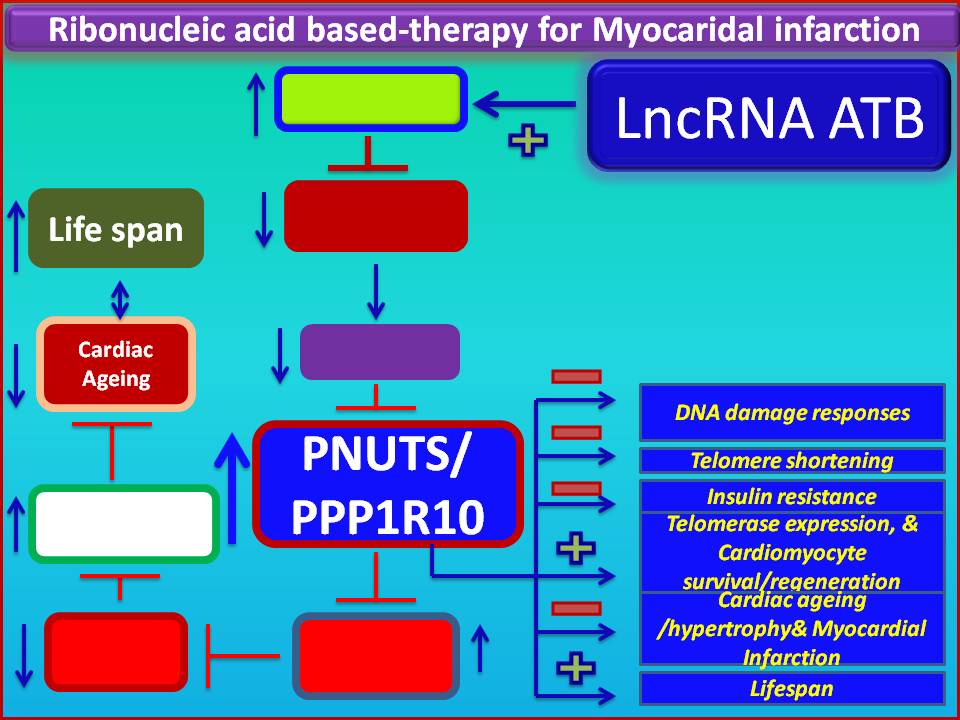
Ribonucleic acid-based therapy for Myocardial Infarction: LncRNA ATB inhibits DNA damage responses, induces telomerase expression, inhibits telomere shortening, and promotes cardiomyocyte survival after myocardial infarction, via up-regulation of PNUTS, 9/January/2019, 12.28 am

Ribonucleic acid-based therapy for Myocardial Infarction: LncRNA ATB inhibits DNA damage responses, induces telomerase expression, inhibits telomere shortening, and promotes cardiomyocyte survival after myocardial infarction, via up-regulation of PNUTS, 9/January/2019, 12.28 am 960 720 Dr Boomi's Genom-2-Discovery Center

What they say:  A recent study from the Institute for Cardiovascular Regeneration, Centre of Molecular Medicine, Frankfurt, Germany shows that “MicroRNA-34a regulates cardiac ageing and function.” This study was published, in the 7 March  2013 issue of of the journal Nature,  by Prof Dimmler,…

read more