Heart attack

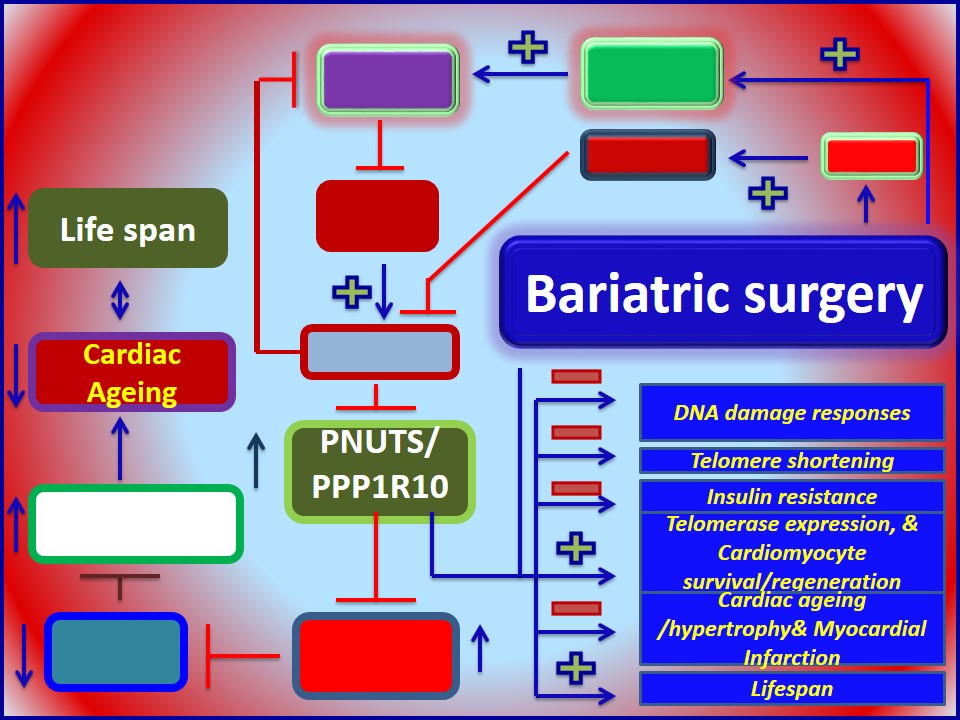
Bariatric surgery protects against and promotes functional recovery after Myocardial Infarction:  Bariatric surgery, a gastrointestinal surgery for weight loss, inhibits DNA damage responses, induces telomerase expression, inhibits telomere shortening, and promotes cardiomyocyte survival after myocardial infarction, via up-regulation of its target gene, 1/May/2019, 12.21 am

Bariatric surgery protects against and promotes functional recovery after Myocardial Infarction:  Bariatric surgery, a gastrointestinal surgery for weight loss, inhibits DNA damage responses, induces telomerase expression, inhibits telomere shortening, and promotes cardiomyocyte survival after myocardial infarction, via up-regulation of its target gene, 1/May/2019, 12.21 am 960 720 Dr Boomi's Genom-2-Discovery Center

What they say:  A recent study from the Institute for Cardiovascular Regeneration, Centre of Molecular Medicine, Frankfurt, Germany shows that “MicroRNA-34a regulates cardiac ageing and function.” This study was published, in the 7 March  2013 issue of of the journal Nature,  by Prof Dimmler,…

read more
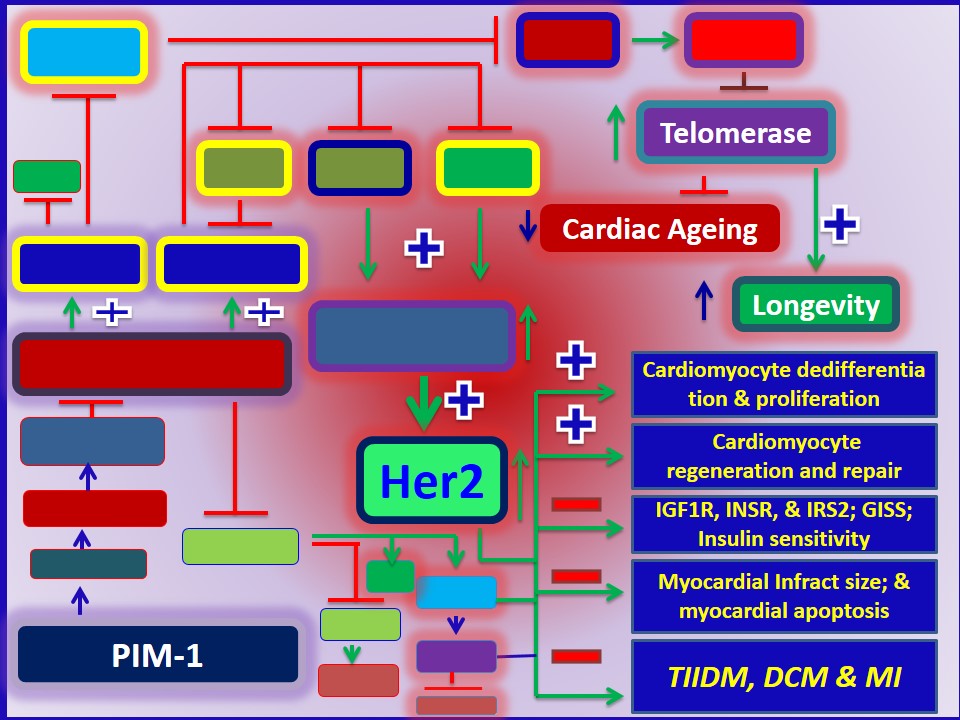
PIM-1-based Regenerative therapy for regaining the lost cardiomyocytes in Myocardial patients: PIM-1, a regulator of cell cycle progression, increases the expression of ERBB2/Her2 and promotes dedifferentiation  of cardiomyocytes, via up-regulation of its target gene, 27/April/2019, 11.40 pm

PIM-1-based Regenerative therapy for regaining the lost cardiomyocytes in Myocardial patients: PIM-1, a regulator of cell cycle progression, increases the expression of ERBB2/Her2 and promotes dedifferentiation  of cardiomyocytes, via up-regulation of its target gene, 27/April/2019, 11.40 pm 960 720 Dr Boomi's Genom-2-Discovery Center

Introduction: What they say A recent study from the Department of Biological Regulation, Weizmann Institute of Science, Rehovot 76100, Israel shows that “ERBB2 triggers mammalian heart regeneration by promoting cardiomyocyte dedifferentiation and proliferation.” This study was published, in the 6 April…

read more

Erythropoietin/Haematopoietin-derived peptide protects against cardiomyopathy: Intracardiac/Epicardial injection of Cyclin helix B peptide (CHBP) protects against Cardiomyopathy: Cyclin helix B peptide (CHBP) decreases the expression of Sox6, restores the balance between slow- and fast-twitch myofiber proteins and alleviates Cardiomyopathy, via upregulation of its target gene, 27/April/2019, 10.45 pm

Erythropoietin/Haematopoietin-derived peptide protects against cardiomyopathy: Intracardiac/Epicardial injection of Cyclin helix B peptide (CHBP) protects against Cardiomyopathy: Cyclin helix B peptide (CHBP) decreases the expression of Sox6, restores the balance between slow- and fast-twitch myofiber proteins and alleviates Cardiomyopathy, via upregulation of its target gene, 27/April/2019, 10.45 pm 960 720 Dr Boomi's Genom-2-Discovery Center

Introduction: What they say A recent study from the Department of Cardiology, Boston Children’s Hospital, Harvard Medical School, Boston, Massachusetts, USA; and Harvard Stem Cell Institute, Harvard University, Cambridge, Massachusetts, USA shows that “Trbp regulates heart function through microRNA-mediated Sox6 repression.” This…

read more

Embryo-derived peptide protects against cardiomyopathy: Intracardiac/Epicardial injection of Synthetic PreImplantation factor (sPIF) protects against Cardiomyopathy: Synthetic PreImplantation factor (sPIF) decreases the expression of Sox6, restores the balance between slow- and fast-twitch myofiber proteins and alleviates Cardiomyopathy, via upregulation of its target gene, 26/April/2019, 11.10 pm

Embryo-derived peptide protects against cardiomyopathy: Intracardiac/Epicardial injection of Synthetic PreImplantation factor (sPIF) protects against Cardiomyopathy: Synthetic PreImplantation factor (sPIF) decreases the expression of Sox6, restores the balance between slow- and fast-twitch myofiber proteins and alleviates Cardiomyopathy, via upregulation of its target gene, 26/April/2019, 11.10 pm 960 720 Dr Boomi's Genom-2-Discovery Center

Introduction: What they say A recent study from the Department of Cardiology, Boston Children’s Hospital, Harvard Medical School, Boston, Massachusetts, USA; and Harvard Stem Cell Institute, Harvard University, Cambridge, Massachusetts, USA shows that “Trbp regulates heart function through microRNA-mediated Sox6 repression.” This…

read more

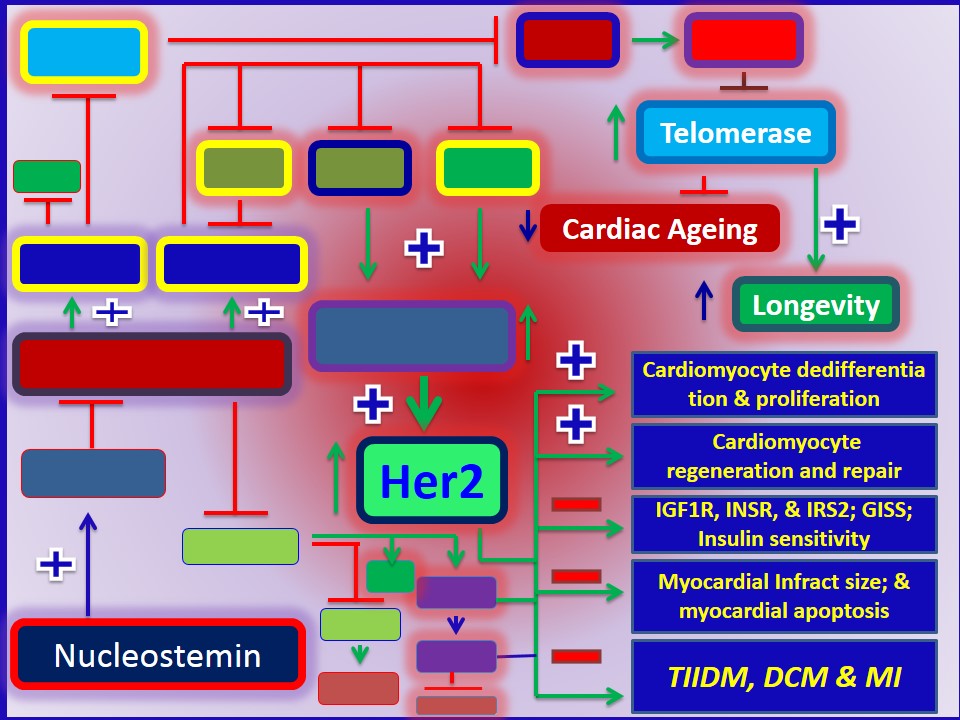
Nucleostemin-based Regenerative therapy for regaining the lost cardiomyocytes in Myocardial patients: Nucleostemin, a nucleolus protein known to play a role in cell cycle progression, increases the expression of ERBB2/Her2 and promotes dedifferentiation  of cardiomyocytes, via up-regulation of its target gene, 25/April/2019, 6.54 am

Nucleostemin-based Regenerative therapy for regaining the lost cardiomyocytes in Myocardial patients: Nucleostemin, a nucleolus protein known to play a role in cell cycle progression, increases the expression of ERBB2/Her2 and promotes dedifferentiation  of cardiomyocytes, via up-regulation of its target gene, 25/April/2019, 6.54 am 960 720 Dr Boomi's Genom-2-Discovery Center

Introduction: What they say A recent study from the Department of Biological Regulation, Weizmann Institute of Science, Rehovot 76100, Israel shows that “ERBB2 triggers mammalian heart regeneration by promoting cardiomyocyte dedifferentiation and proliferation.” This study was published, in the 6 April…

read more

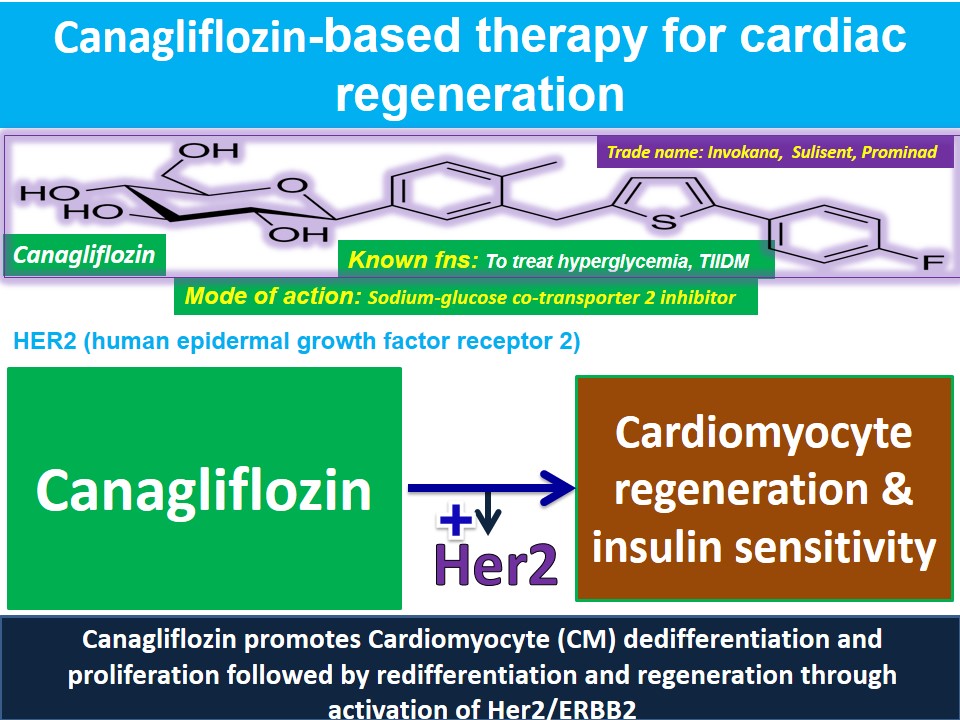
Canagliflozin-based Regenerative therapy for regaining the lost cardiomyocytes in Myocardial patients: Canagliflozin (Brand name: Invokana, Sulisent, Prominad), a Sodium-glucose co-transporter 2 inhibitor used to treat TIIDM, increases the expression of ERBB2/Her2 and promotes dedifferentiation  of cardiomyocytes, via up-regulation of its target gene, 24/April/2019, 7.37 am

Canagliflozin-based Regenerative therapy for regaining the lost cardiomyocytes in Myocardial patients: Canagliflozin (Brand name: Invokana, Sulisent, Prominad), a Sodium-glucose co-transporter 2 inhibitor used to treat TIIDM, increases the expression of ERBB2/Her2 and promotes dedifferentiation  of cardiomyocytes, via up-regulation of its target gene, 24/April/2019, 7.37 am 960 720 Dr Boomi's Genom-2-Discovery Center

Introduction: What they say A recent study from the Department of Biological Regulation, Weizmann Institute of Science, Rehovot 76100, Israel shows that “ERBB2 triggers mammalian heart regeneration by promoting cardiomyocyte dedifferentiation and proliferation.” This study was published, in the 6 April…

read more