Ideas

Laminar shear stress-based therapy for autoimmune diabetes (TIDM): Laminar shear stress increases PD-L1 expression, increases Tregs function, promotes immune tolerance, increases pancreatic β-cell proliferation and regeneration, increases insulin secretion, improves insulin sensitivity, increases energy utilization, and reverses TIDM, via up-regulation of its target gene, 27/November/2018, 11.25 am

Laminar shear stress-based therapy for autoimmune diabetes (TIDM): Laminar shear stress increases PD-L1 expression, increases Tregs function, promotes immune tolerance, increases pancreatic β-cell proliferation and regeneration, increases insulin secretion, improves insulin sensitivity, increases energy utilization, and reverses TIDM, via up-regulation of its target gene, 27/November/2018, 11.25 am 960 720 Dr Boomi's Genom-2-Discovery Center

Introduction: What they say A study from the International Center for T1D, Pediatric Clinical Research Center Romeo ed Enrica Invernizzi, “L. Sacco” Department of Biomedical and Clinical Sciences, University of Milan, Milan…

read more

Blue-light based Cardiac rejuvenation therapy: Exposure to intense blue light suppresses tumor suppressor INK4a/p16 expression and inhibits dilated cardiomyopathy, via upregulation of its target gene, 27/November/2018, 10.28 am

Blue-light based Cardiac rejuvenation therapy: Exposure to intense blue light suppresses tumor suppressor INK4a/p16 expression and inhibits dilated cardiomyopathy, via upregulation of its target gene, 27/November/2018, 10.28 am 960 720 Dr Boomi's Genom-2-Discovery Center

What we say: Dr L Boominathan PhD, the Director-cum-chief Scientist of GBMD, reports that: Blue-light based Cardiac rejuvenation therapy: Exposure to intense blue light suppresses tumor suppressor INK4a/p16 expression and inhibits dilated…

read more

 Molecular therapy for safeguarding your heart against cardiac dysfunction: Prostaglandin E2(PGE2)/Dinoprostone  (trade name: Cervidil, Propess, and others), the drug used to induce labor and in others,  decreases tumor suppressor Mir-128 and cyclin-dependent kinase inhibitor p27 expression, increases SUZ12 expression, increases Cyclin E and CDK2 expression, promotes proliferation/re-entry of postnatal/adult cardiomyocytes, attenuates fibrosis, ameliorates cardiac dysfunction, and promotes heart repair in response to myocardial infarction, via up-regulation of its target gene, 27/November/2018, 10.10 am

 Molecular therapy for safeguarding your heart against cardiac dysfunction: Prostaglandin E2(PGE2)/Dinoprostone  (trade name: Cervidil, Propess, and others), the drug used to induce labor and in others,  decreases tumor suppressor Mir-128 and cyclin-dependent kinase inhibitor p27 expression, increases SUZ12 expression, increases Cyclin E and CDK2 expression, promotes proliferation/re-entry of postnatal/adult cardiomyocytes, attenuates fibrosis, ameliorates cardiac dysfunction, and promotes heart repair in response to myocardial infarction, via up-regulation of its target gene, 27/November/2018, 10.10 am 960 720 Dr Boomi's Genom-2-Discovery Center

Introduction: What they say: A recent study from Department of Pathology and Laboratory Medicine, University of Cincinnati College of Medicine, Cincinnati, OH, 45267, USA; Key Laboratory of Molecular Target and…

read more

Hot water immersion-based adjuvant therapy for cardiac hypertrophy and fibrosis: Hot water immersion (at 39°C for 1 hour) decreases MiR-29 expression, activates wnt- signaling and its components GSK3B, ICAT/CTNNBIP1, HBP1 and GLIS2, attenuates pathologic hypertrophy, inhibits fibrosis of the heart tissue, and improves cardiac function via upregulation of its target gene, 27/November/2017, 6.48 am

Hot water immersion-based adjuvant therapy for cardiac hypertrophy and fibrosis: Hot water immersion (at 39°C for 1 hour) decreases MiR-29 expression, activates wnt- signaling and its components GSK3B, ICAT/CTNNBIP1, HBP1 and GLIS2, attenuates pathologic hypertrophy, inhibits fibrosis of the heart tissue, and improves cardiac function via upregulation of its target gene, 27/November/2017, 6.48 am 960 720 Dr Boomi's Genom-2-Discovery Center

Introduction: What they say:   A recent study from the Institute of Pharmacology and Toxicology, Technical University Munich (TUM), 80802, Munich, Germany; DZHK (German Center for Cardiovascular Research), partner site Munich…

read more

Molecular therapy for aging-associated diseases and Lifespan extension: Prostaglandin D2 (PGD2), the principal cyclooxygenase (COX2) metabolite of arachidonic acid, increases NMN/NAD levels, decreases interaction of DBC1 with PARP1, increases PARP1 activity, promotes DNA repair, augments tolerance against radiation, cancer and aging via down-regulation of its target gene, 27/November/2018, 6.29 am

Molecular therapy for aging-associated diseases and Lifespan extension: Prostaglandin D2 (PGD2), the principal cyclooxygenase (COX2) metabolite of arachidonic acid, increases NMN/NAD levels, decreases interaction of DBC1 with PARP1, increases PARP1 activity, promotes DNA repair, augments tolerance against radiation, cancer and aging via down-regulation of its target gene, 27/November/2018, 6.29 am 960 720 Dr Boomi's Genom-2-Discovery Center

Introduction: What they say A study from Department of Genetics, Paul F. Glenn Center for the Biology of Aging, Harvard Medical School, Boston, MA, USA; and Department of Pharmacology, School…

read more

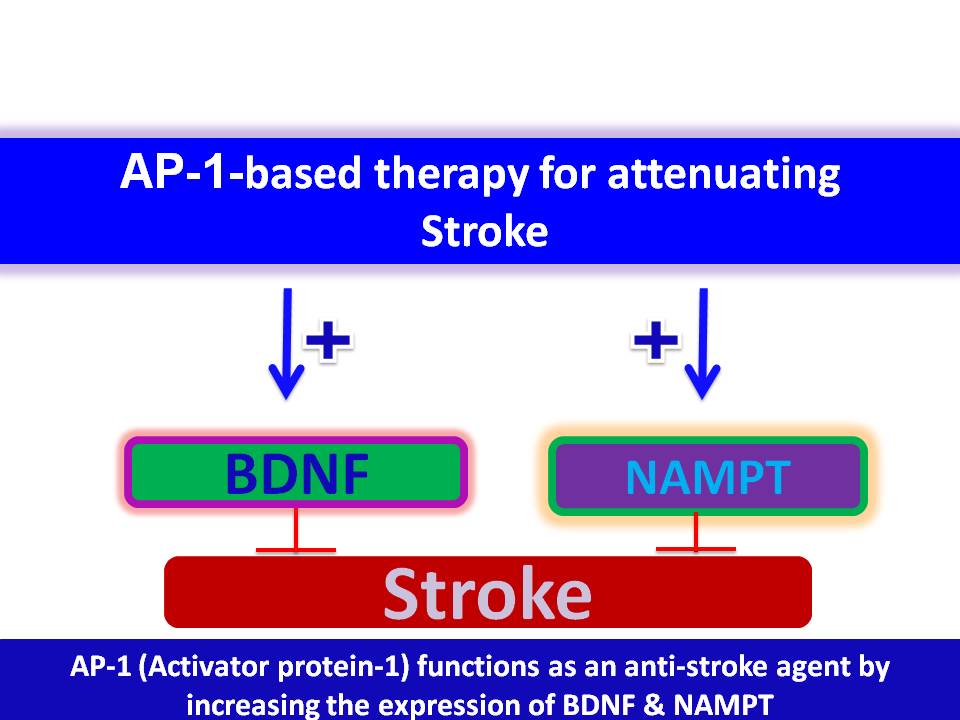
AP-1(Activator protein-1)-inducing compounds may protect you against stroke: AP-1 attenuates hippocampal neurons injury, augments regenerative neurogenesis after Ischemic Stroke, and ameliorates stroke damage and neurological deficits, via up-regulation of its target genes BDNF and NAMPT, 25/November/2018, 8.16 am

AP-1(Activator protein-1)-inducing compounds may protect you against stroke: AP-1 attenuates hippocampal neurons injury, augments regenerative neurogenesis after Ischemic Stroke, and ameliorates stroke damage and neurological deficits, via up-regulation of its target genes BDNF and NAMPT, 25/November/2018, 8.16 am 960 720 Dr Boomi's Genom-2-Discovery Center

Introduction: What they say  A recent study from Research Center for Neurobiology and Department of Neurobiology, Xuzhou Medical College, 209 Tongshan Road, Xuzhou, Jiangsu 221004, PR China; and School of Public…

read more