Pain

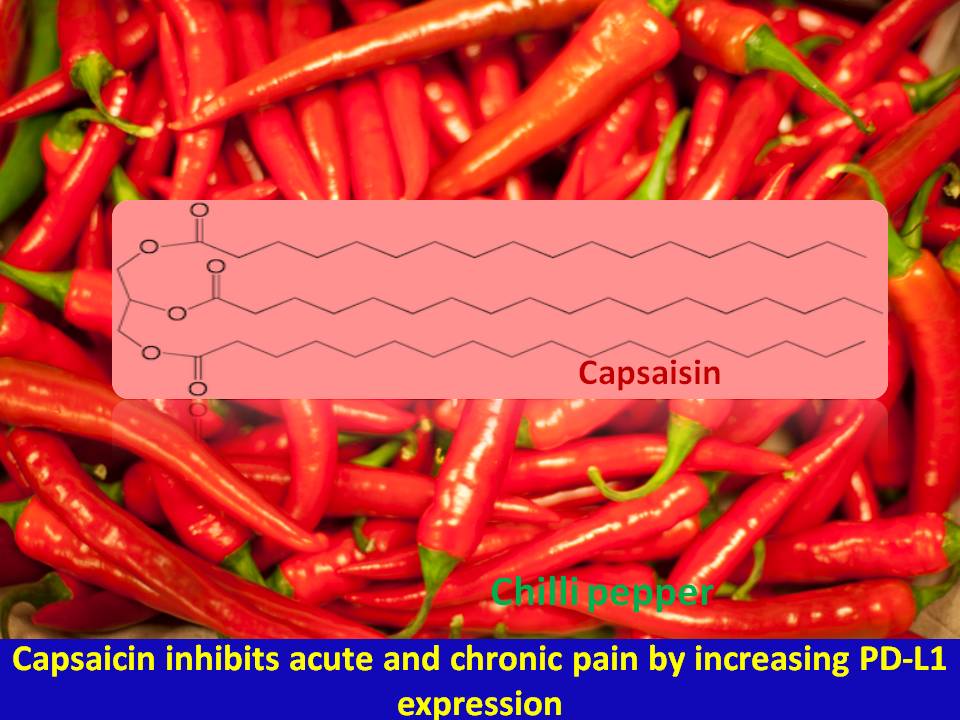
Natural product-derived PD-1 pathway activation for Pain therapy: Capsaicin, isolated from Chilli pepper,  increases the expression of PD-L1, attenuates acutes and chronic pain, and suppresses mechanical and thermal hypersensitivity and inhibits nociceptive neuron excitability via up-regulation of its target gen, 31/July/2017, 12.17 am

Natural product-derived PD-1 pathway activation for Pain therapy: Capsaicin, isolated from Chilli pepper,  increases the expression of PD-L1, attenuates acutes and chronic pain, and suppresses mechanical and thermal hypersensitivity and inhibits nociceptive neuron excitability via up-regulation of its target gen, 31/July/2017, 12.17 am 960 720 Dr Boomi's Genom-2-Discovery Center

Introduction:What they say: A recent study from Institute of Neurobiology, Institutes of Brain Science and State Key Laboratory of Medical Neurobiology, Collaborative Innovation Center for Brain Science, Fudan University, Shanghai,…

read more
The PD-1 pathway activation for Pain therapy: Ursodeoxycholic acid  increases the expression of PD-L1, attenuates acutes and chronic pain, and suppresses mechanical and thermal hypersensitivity and inhibits nociceptive neuron excitability via up-regulation of its target gene, 25/July/2017, 12.26  pm

The PD-1 pathway activation for Pain therapy: Ursodeoxycholic acid  increases the expression of PD-L1, attenuates acutes and chronic pain, and suppresses mechanical and thermal hypersensitivity and inhibits nociceptive neuron excitability via up-regulation of its target gene, 25/July/2017, 12.26  pm 960 720 Dr Boomi's Genom-2-Discovery Center

Introduction:What they say: A recent study from Institute of Neurobiology, Institutes of Brain Science and State Key Laboratory of Medical Neurobiology, Collaborative Innovation Center for Brain Science, Fudan University, Shanghai,…

read more

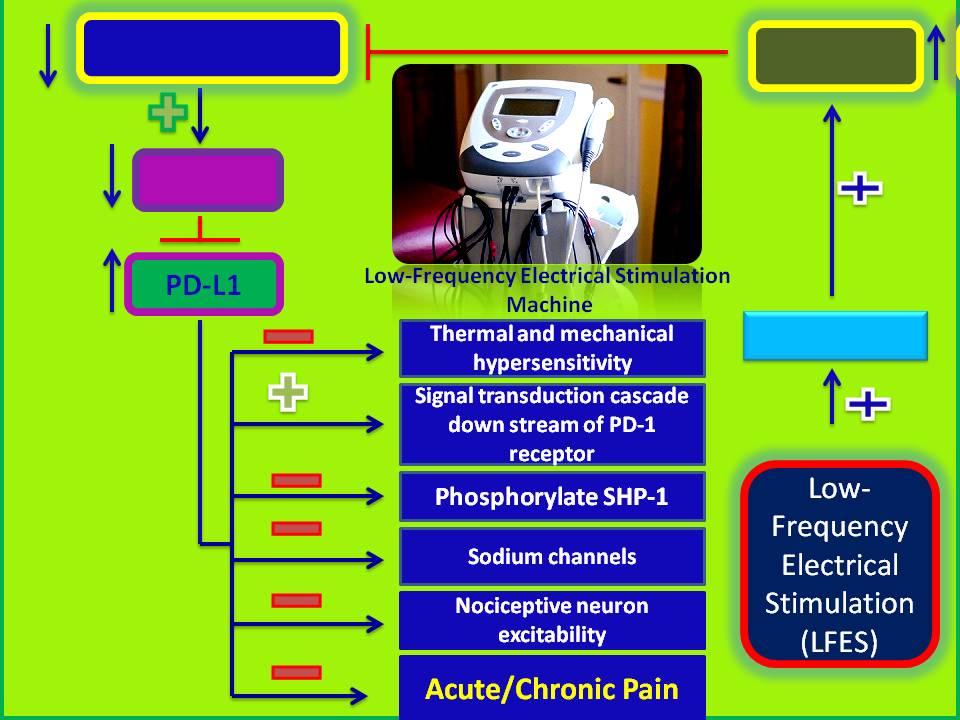
Low-Frequency Electrical Stimulation (LFES)-based PD-1 pathway activation for Pain therapy: Low-Frequency Electrical Stimulation (LFES) increases the expression of PD-L1, attenuates acutes and chronic pain, and suppresses mechanical and thermal hypersensitivity and inhibits nociceptive neuron excitability via up-regulation of its target gene, 4/July/2017, 1.21 am

Low-Frequency Electrical Stimulation (LFES)-based PD-1 pathway activation for Pain therapy: Low-Frequency Electrical Stimulation (LFES) increases the expression of PD-L1, attenuates acutes and chronic pain, and suppresses mechanical and thermal hypersensitivity and inhibits nociceptive neuron excitability via up-regulation of its target gene, 4/July/2017, 1.21 am 960 720 Dr Boomi's Genom-2-Discovery Center

Introduction:What they say: A recent study from Institute of Neurobiology, Institutes of Brain Science and State Key Laboratory of Medical Neurobiology, Collaborative Innovation Center for Brain Science, Fudan University, Shanghai, China; and Department of…

read more

Acupuncture-based PD-1 pathway activation for Pain therapy: Acupuncture therapy increases the expression of PD-L1, attenuates acutes and chronic pain, and suppresses mechanical and thermal hypersensitivity and inhibits nociceptive neuron excitability via up-regulation of its target gen, 22/June/2017, 11.37 pm

Acupuncture-based PD-1 pathway activation for Pain therapy: Acupuncture therapy increases the expression of PD-L1, attenuates acutes and chronic pain, and suppresses mechanical and thermal hypersensitivity and inhibits nociceptive neuron excitability via up-regulation of its target gen, 22/June/2017, 11.37 pm 960 720 Dr Boomi's Genom-2-Discovery Center

Introduction:What they say: A recent study from Institute of Neurobiology, Institutes of Brain Science and State Key Laboratory of Medical Neurobiology, Collaborative Innovation Center for Brain Science, Fudan University, Shanghai,…

read more
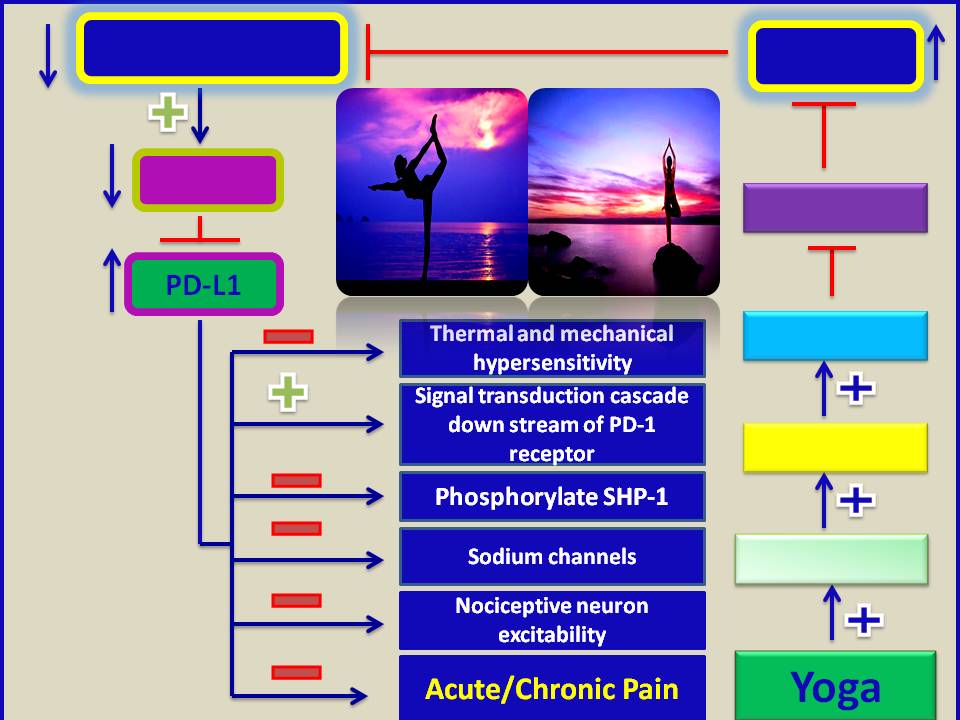
Yoga-based PD-1 pathway activation for Pain therapy: Yoga therapy increases the expression of PD-L1, attenuates acutes and chronic pain, and suppresses mechanical and thermal hypersensitivity and inhibits nociceptive neuron excitability via up-regulation of its target gene, 21/June/2017, 10.02 pm

Yoga-based PD-1 pathway activation for Pain therapy: Yoga therapy increases the expression of PD-L1, attenuates acutes and chronic pain, and suppresses mechanical and thermal hypersensitivity and inhibits nociceptive neuron excitability via up-regulation of its target gene, 21/June/2017, 10.02 pm 960 720 Dr Boomi's Genom-2-Discovery Center

Introduction:What they say: A recent study from Institute of Neurobiology, Institutes of Brain Science and State Key Laboratory of Medical Neurobiology, Collaborative Innovation Center for Brain Science, Fudan University, Shanghai,…

read more

The PD-1 pathway activation for Pain therapy: Pyruvate, the end product of glycolysis, increases the expression of PD-L1, attenuates acutes and chronic pain, and suppresses mechanical and thermal hypersensitivity and inhibits nociceptive neuron excitability via up-regulation of its target gene, 20/June/2017, 10.51 am

The PD-1 pathway activation for Pain therapy: Pyruvate, the end product of glycolysis, increases the expression of PD-L1, attenuates acutes and chronic pain, and suppresses mechanical and thermal hypersensitivity and inhibits nociceptive neuron excitability via up-regulation of its target gene, 20/June/2017, 10.51 am 960 720 Dr Boomi's Genom-2-Discovery Center

Introduction:What they say: A recent study from Institute of Neurobiology, Institutes of Brain Science and State Key Laboratory of Medical Neurobiology, Collaborative Innovation Center for Brain Science, Fudan University, Shanghai,…

read more