Ideas

Combinatorial therapy for blood-stage Plasmodium infection: A therapeutic mix encompassing  Ketorolac (Trade name: Toradol, Acular, Sprix] and Aspirin (anti-inflammatory drugs) decreases the expression of CTLA-4, PD-L1 and LAG-3, promotes CD4+ T-cell function, increases secretion of protective antibodies, promotes and clear blood-stage malaria via up regulation of its target gene, 21/February/2018, 6.13 am

Combinatorial therapy for blood-stage Plasmodium infection: A therapeutic mix encompassing  Ketorolac (Trade name: Toradol, Acular, Sprix] and Aspirin (anti-inflammatory drugs) decreases the expression of CTLA-4, PD-L1 and LAG-3, promotes CD4+ T-cell function, increases secretion of protective antibodies, promotes and clear blood-stage malaria via up regulation of its target gene, 21/February/2018, 6.13 am 960 720 Dr Boomi's Genom-2-Discovery Center

Introduction: What they say A study from the Department of Microbiology and Immunology, University of Iowa Carver College of Medicine, Iowa City, Iowa, USA shows that “Regulatory T cells impede…

read more

Combinatorial therapy for Metastatic cancers: A pharmaceutical mixture encompassing Docosahexaenoic acid (DHA) and Aspirin (ASA)   increases the expression of tumor/metastatic suppressors GRHL3 and Long ncRNA GAS5 , inhibits cell cycle progression, and suppresses migration, invasion and metastasis of cancer cells via up regulation of its target gene, 21/February/2018, 6.00 am

Combinatorial therapy for Metastatic cancers: A pharmaceutical mixture encompassing Docosahexaenoic acid (DHA) and Aspirin (ASA)   increases the expression of tumor/metastatic suppressors GRHL3 and Long ncRNA GAS5 , inhibits cell cycle progression, and suppresses migration, invasion and metastasis of cancer cells via up regulation of its target gene, 21/February/2018, 6.00 am 960 720 Dr Boomi's Genom-2-Discovery Center

From significance of the study to Public health relevance:  Given that: (i) each year nearly 14 million people are diagnosed with cancer globally, and little more than half of them…

read more

Molecular therapy for autoimmune diabetes (TIDM): Ursodeoxycholic acid increases PD-L1 expression, increases Tregs function, promotes immune tolerance, increases pancreatic β-cell proliferation and regeneration, increases insulin secretion, improves insulin sensitivity, increases energy utilization, and reverses TIDM, via up regulation of its target gene, 20/February/2018,12.41 am

Molecular therapy for autoimmune diabetes (TIDM): Ursodeoxycholic acid increases PD-L1 expression, increases Tregs function, promotes immune tolerance, increases pancreatic β-cell proliferation and regeneration, increases insulin secretion, improves insulin sensitivity, increases energy utilization, and reverses TIDM, via up regulation of its target gene, 20/February/2018,12.41 am 960 720 Dr Boomi's Genom-2-Discovery Center

Introduction: What they say A study from the International Center for T1D, Pediatric Clinical Research Center Romeo ed Enrica Invernizzi, “L. Sacco” Department of Biomedical and Clinical Sciences, University of…

read more

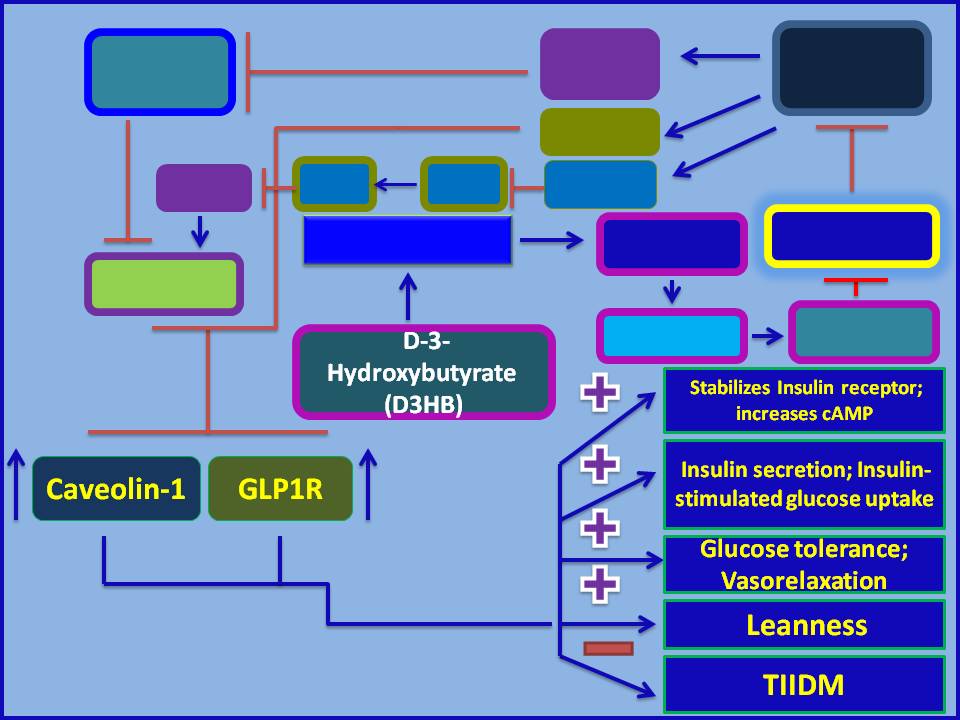
Molecular therapy for diabetes (TIDM): D-3-Hydroxybutyrate (D3HB)  increases GLP1R and Caveolin-1 (CAV-1) expression, promotes glucose-induced insulin secretion, improves insulin sensitivity, increases energy utilization, promotes weight loss and protects from diet-induced obesity and TIIDM via up regulation of its target gene, 20/February/2018, 12.35 am

Molecular therapy for diabetes (TIDM): D-3-Hydroxybutyrate (D3HB)  increases GLP1R and Caveolin-1 (CAV-1) expression, promotes glucose-induced insulin secretion, improves insulin sensitivity, increases energy utilization, promotes weight loss and protects from diet-induced obesity and TIIDM via up regulation of its target gene, 20/February/2018, 12.35 am 960 720 Dr Boomi's Genom-2-Discovery Center

Introduction: What they say   A study from the Comprehensive Diabetes Center and Department of Medicine, Division of Endocrinology, Diabetes, and Metabolism, University of Alabama at Birmingham, Birmingham, AL shows that…

read more

Combinatorial therapy for Diabetic retinopathy: A pharmaceutical mixture encompassing Pantoprazole, Epicatechin and Matrine (PPEM) inhibits Soluble epoxide hydrolase (sEH) expression, decreases toxic 19,20-dihydroxydocosapentaenoic acid levels, inhibits pericyte loss, vascular permeability, and inflammation of the eye and progression of diabetic retinopathy, via down regulation of its target gene, 20/February/2018, 12.28 am

Combinatorial therapy for Diabetic retinopathy: A pharmaceutical mixture encompassing Pantoprazole, Epicatechin and Matrine (PPEM) inhibits Soluble epoxide hydrolase (sEH) expression, decreases toxic 19,20-dihydroxydocosapentaenoic acid levels, inhibits pericyte loss, vascular permeability, and inflammation of the eye and progression of diabetic retinopathy, via down regulation of its target gene, 20/February/2018, 12.28 am 960 720 Dr Boomi's Genom-2-Discovery Center

Introduction: What they say A study from the Institute for Vascular Signalling, Centre for Molecular Medicine, Goethe University, Frankfurt am Main, Germany; and German Centre for Cardiovascular Research (DZHK) partner…

read more

Vitamin-based therapy for body weight control, energy homeostasis and TIIDM: A pharmaceutical mixture encompassing Pyridoxamine (PM) and Melatonin decreases CADM1 and its downstream target genes that inhibit glucose-induced insulin secretion, improves insulin sensitivity, increases energy utilization, promotes weight loss and protects from diet-induced obesity and TIIDM via up regulation of its target gene, 20/February/2017, 12.08 am

Vitamin-based therapy for body weight control, energy homeostasis and TIIDM: A pharmaceutical mixture encompassing Pyridoxamine (PM) and Melatonin decreases CADM1 and its downstream target genes that inhibit glucose-induced insulin secretion, improves insulin sensitivity, increases energy utilization, promotes weight loss and protects from diet-induced obesity and TIIDM via up regulation of its target gene, 20/February/2017, 12.08 am 960 720 Dr Boomi's Genom-2-Discovery Center

Introduction: What they say A study from the Max Delbrück Center for Molecular Medicine, Berlin, Germany shows that “Regulation of body weight and energy homeostasis by neuronal cell adhesion molecule1.”…

read more