

Idea Proposed/Formulated by: Dr L Boominathan Ph.D.
Significance: A number of studies suggest that Metformin, the widely used drug in the treatment of T2DM, protects against cardaic dysfunction; and increases lifespan of mammals. However the mechanistic basis of which remains largely elusive.

Figure 1. Mechanistic insights into how the anti-diabetic drug Metformin protects against cardiac dysfunction. Metformin, by regulating the expression of its target gene, it inhibits the expression of p38alpha. Thereby, it increases NAD+ levels and promotes cardiomyocytes proliferation/surivival/regeneration.
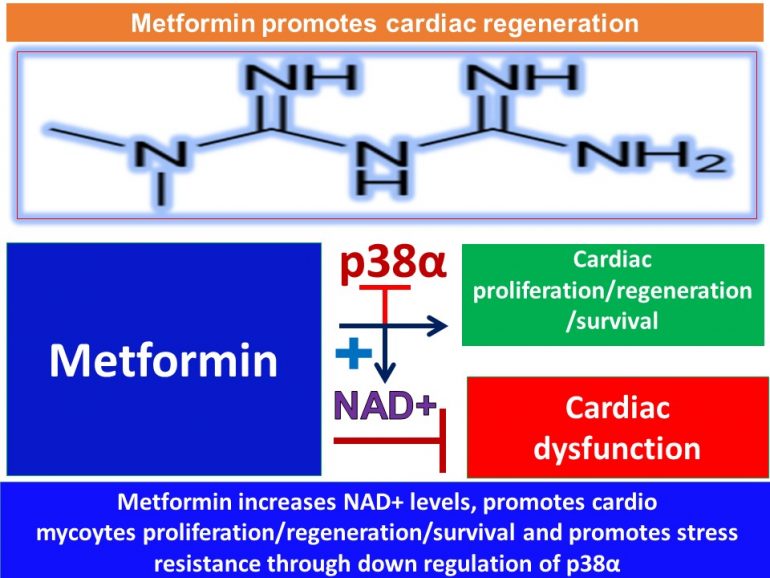
Figure 2. Metformin function as a cardioprotective agent through down regulation of p38alpha and up regulation of NAD+ levels.
This study suggests, for the first time, that Metformin, by suppressing the expression of its target gene p38-α, it can: a) promote heart regeneration and function; and b) augment stress resistance against hypoxic stress.
Thus, pharmacological formulations encompassing “Metformin or its analogues, either alone or in combination with other drugs” can be used to protect against cardiac dysfunction.
# Research cooperation

Undisclosed information: How does metformin suppress the expression of p38-α?
Terms & Conditions apply http://genomediscovery.org/registration/terms-and-conditions/
For more details on payment, you may reach us at admin@genomediscovery.org
References:
Citation: Boominathan, L., Meformin aids in heart regeneration and promotes stress resistance: Metformin, the widely used drug in the treatment of T2DM, promotes heart regeneration and function and augments stress resistance against hypoxic stress through down regulation of p38-α, 8/January/2020, 1.58 pm, Genome-2-Bio-Medicine Discovery center (GBMD), http://genomediscovery.org
Web: http://genomediscovery.org
Courtesy: When you cite drop us a line at info@genomediscovery.org