

Introduction: What they say:
A study from the Institute of Metabolic Physiology, Heinrich Heine University, Düsseldorf, Germany shows that: “Characterization of pancreatic NMDA receptors as possible drug targets for diabetes treatment.” This study was published in the 16 March 2015 issue of the Journal “Nature Medicine” (one of the best journal in “General Medicine” with
an impact factor of 30+ ) by Prof. Lammert E, Marquard J and others.
What we say:
On the foundation of this interesting finding, Dr L Boominathan PhD, Director-cum-chief Scientist of GBMD, reports that: Natural product therapy for Diabetes mellitus: Oleanolic acid, isolated from Syzygium S., Olea europaea, Prosopis glandulosa, among others, increases islet insulin levels, islet cell mass and glucose tolerance via down-regulation of NMDA receptor GluN2A
Significance:
Given that: (1) more than 387 million people worldwide are affected by Diabetes mellitus (DM); (2) the life-long painful injection/drug treatment is required to treat DM; (3) the global economic cost spent for diabetes treatment in 2014 was little more than 600 billion US dollars, there is an urgent need to find: (i) a way to induce regeneration of adult β-cells that were lost in DM; (ii) a cheaper alternative to the existing expensive weight-loss drugs; (iii) a side-effect-free natural product-based drug; and (iv) a way to cure, not just treat, diabetes.
What is known:
Prof. Lammert ’s research team has shown earlier that NMDAR antagonist dextromethorphan promotes glucose tolerance, suggesting that inhibition of NMDAR activity may promote glucose tolerance.
Research findings to Therapeutic opportunity:
This study suggests a Natural product-based therapy for diabetes mellitus.
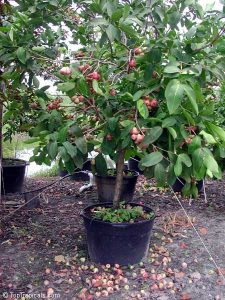
Java apple tree
Oleanolic acid, by increasing the expression of its target gene, it may: (1) decrease the expression of one of the subunits of NMDA receptor GluN2A; (2) increase islet insulin levels; (3) increase islet cell mass; and (4) improve glucose tolerance.

Oleanolic acid, isolated from Syzygium S. or Jawa apple, among others, as indicated below, promotes insulin sensitivity and glucose tolerance via down-regulation of NMDA receptor, GluN2A

Oleanolic acid is found in Olea europaea

Oleanolic acid is found in Prosopis glandulosa
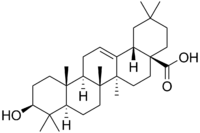
Oleanolic acid
Thus, pharmacological formulations encompassing “Oleanolic acid or its analogs“ may be used in the treatment of T2DM, as it may increase insulin levels, islet cell mass and glucose tolerance.
Citation: Boominathan, L., Natural product therapy for Diabetes mellitus: Oleanolic acid, isolated from Syzygium S., Olea europaea, Prosopis glandulosa, among others, increases islet insulin levels, islet cell mass and glucose tolerance via down-regulation of NMDA receptor GluN2A, 10/November/2016, 11.12 pm, Genome-2-Bio-Medicine Discovery center (GBMD), http://genomediscovery.org
Courtesy: When you cite drop us a line at info@genomediscovery.org
Web: http://genomediscovery.org or newbioideas.com
# Research cooperation
Idea Proposed (with experimental evidence) by: Dr L Boominathan Ph.D.
Amount: $300
Undisclosed information: How Oleanolic acid decreases the expression of NMDA receptor GluN2A and promotes insulin sensitivity
