

What they say:
A study from the Division of Endocrinology, Boston Children’s Hospital, Harvard Medical School, Boston, MA 02130, USA; Laboratory of Gene Regulation and Signal Transduction, Department of Pharmacology, School of Medicine, University of California, San Diego, 9500 Gilman Drive, San Diego, CA 92093, USA; and Department of Pathology, School of Medicine, University of California, San Diego, 9500 Gilman Drive, San Diego, CA 92093, USA shows that “Inflammation Improves Glucose Homeostasis through IKKß-XBP1s Interaction.” This research paper was published in the 3 November 2016 issue of the journal “Cell” [One of the best research journals in General Biology with an I.F of 28.71] by Profs. Ozcan Umut, Karin M, Dr. Liu J, and others.
What we say:
On the foundation of this interesting finding, Dr L Boominathan PhD, Director-cum-chief Scientist of GBMD, reports that: Natural product therapy for glucose homeostasis and TIIDM: Kaempferol, found in Allium cepa, Aloe vera, Coccinia grandis, Moringa oleifera, & Rosmarinus officinalis among others, increases IKKß and XBP1s activity, decreases the levels of tumor suppressor/stress-responsive proteins, such as PDCD4, and PTEN, reduces ER stress, improves insulin sensitivity, promotes glucose homeostasis and prevents the progression of TIIDM via up regulation of its target gene
Significance of the study:
Given that: (1) more than 387 million people worldwide are affected by Diabetes mellitus (DM); (2) Diabetes is going to be one of the top 10 causes of death by 2030; (3) the life-long painful injection/drug treatment is required to treat DM; (3) the global economic cost spent for diabetes treatment in 2014 was little more than 600 billion US dollars, there is an urgent need to find: (i) a way to induce regeneration of adult ß-cells that were lost in DM; (ii) a cheaper alternative to the existing expensive weight-loss drugs; (iii) a side-effect-free natural product-based drug; and (iv) a way to cure, not just treat, diabetes.
What is known?
Prof. Ozcan Umut’s research team has recently shown that IKKß, by phosphorylating spliced form of X-Box Binding Protein 1 (XBP1s), it increases the activity of XBP1s. Thereby, it (1) decreases ER stress; (2) increases insulin sensitivity; and (3) promotes glucose homeostasis. However, the mechanistic basis of its regulation remains largely unclear.
From Research findings to Therapeutic opportunity:
I have published earlier that Kaempferol slows down ageing and increases median lifespan via up regulation of BuBR1.
This study suggests, for the first time, a natural product based therapy for TIIDM. Kaempferol, by increasing the expression of its target gene, it may increase the activity of XBP1s. Thereby, it may: (1) decrease the expression of stress-responsive/pro-apoptotic/tumor suppressive proteins, such as PTEN, PDCD4 etc.,; (2) decrease ER stress; (3) increase insulin sensitivity; and (4) promote glucose homeostasis.

Kaempferol increases the activity of XBP1s, decreases the expression of stress-responsive proteins such as PDCD4, & PTEN, increases insulin sensitivity and promotes glucose homeostasis

Kaempferol is found in Aloe vera, among others, as indicated below.
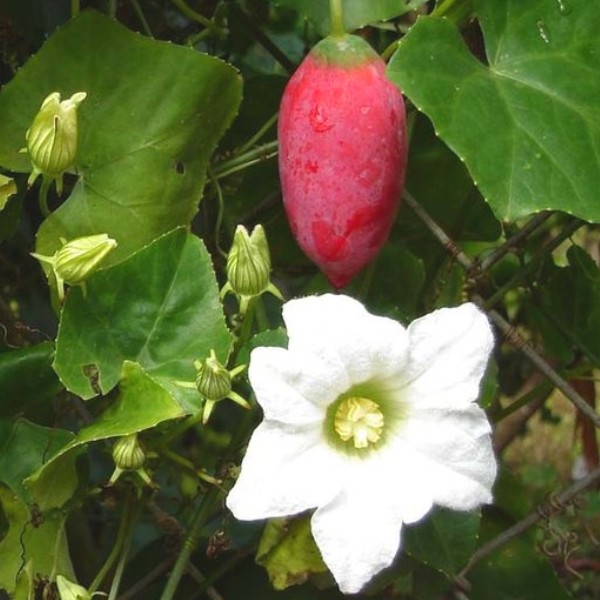
Coccinia grandis

Rosmarinus officinalis

Moringa Olifera

Allium cepa

Allium cepa (flowers)
Thus, pharmacological formulations encompassing “Kaempferol or its analogues” may be used to treat TIIDM.
Idea Proposed/Formulated (with experimental evidence) by: Dr L Boominathan Ph.D.
Terms & Conditions apply http://genomediscovery.org/registration/terms-and-conditions/
Citation: Boominathan, L., Natural product therapy for glucose homeostasis and TIIDM: Kaempferol, found in Allium cepa, Aloe vera, Coccinia grandis, Moringa oleifera, Rosmarinus officinalis & among others, increases IKKß and XBP1s activity, decreases the levels of tumor suppressor/stress-responsive proteins, such as PDCD4, and PTEN, reduces ER stress, improves insulin sensitivity, promotes glucose homeostasis and prevents the progression of TIIDM via up regulation of its target gene, 15/November/2015, 12.03 pm, Genome-2-Bio-Medicine Discovery center (GBMD), http://genomediscovery.org
Web: http://genomediscovery.org or http://newbioideas.com
Amount: $ 500
Undisclosed mechanistic information: How Kaempferol increases the activity of activity of XBP1s and decreases the expression of PTEN and PDCD4
# Research cooperation
