

Introduction: What they say
A study from the Zhongnan Hospital of Wuhan University, Wuhan 430071, China; and Medical Research Institute, Wuhan University, Wuhan 430071, China shows that “Polo-like Kinase-1 Regulates Myc Stabilization and Activates a Feedforward Circuit Promoting Tumor Cell Survival.” This research paper was published in the 3 November 2016 issue of the journal “Molecular cell” [One of the best research journals in General Biology with an I.F of 13.958] by Prof. Guoliang Qing, Dr. Daibiao Xiao, and others.
What we say:
On the foundation of this interesting finding, Dr L Boominathan PhD, Director-cum-chief Scientist of GBMD, reports that: Natural product therapy for N-Myc-overexpressing tumors: Isorhapontigenin, isolated from Aiphanes Aculeata, and Norway/Sitka/White Spruce, increases the levels of tumor suppressor proteins, TAp63, TAp63 and Fbw7 (SCF Fbw7 ubiquitin ligase), inhibits the expression of pro-survival proteins N-Myc, Cyclin-E and Mcl-1, and stalls the progression of N-Myc-overexpressing cancers via down regulation of its target gene
Significance of the study:
Given that: (1) N-Myc is amplified in neuroblastoma (20%), Alveolar rhabdomyosarcoma (25%), Small cell lung cancer (20%), & neuroendocrine prostate cancer (40%); (2) N-Myc is overexpressed in a number of cancers, including Alveolar rhabdomyosarcoma, breast cancer and prostate cancer; (3) even intense multimodal treatment saves only less than 50% of neuroblastoma patients; (4) our understanding is incomplete in terms of molecular targets and the oncogenic/malignant pathways involved in N-Myc amplified or overexpressed cancers; (5) cancer causes the highest economic loss compared to all the known causes of death worldwide; and (6) Myc-overexpressed cancer is a common occurance; and it results in considerable economic loss globally, there is an urgent need to find: (i) a cheaper alternative to the existing expensive drugs; (ii) a side-effect-free natural product-based drug; and (iii) a way to effectively treat and stall metastatic progression and relapse of Myc-amplified/overexpressed human cancers.
What is known?
A number of studies suggest that N-Myc is amplified and overexpressed in cancers, as indicated above. However, the mechanistic basis of its deregulation remains largely unclear.
Prof. Qing’s research team has recently shown that: (1) PLK-1 promotes degradation of tumor suppressor protein Fbw7, and thereby, prevents degradation of its substrates such as N-Myc, N-cym, Cyclin-E and Mcl-1; and (2) N-Myc, in turn, in a positive feedback loop, increases the expression of PLK-1. Further, they showed that inhibition of PLK-1 in N-Myc-overexpressing tumors, either alone or together with Bcl-2 antagonists, not only regressed, but also stalled the progression of tumors, possibly, via induction of tumor suppressor Fbw7.
What we say: Research findings:
This study suggests a Natural product-based therapy for Myc-overexpressing cancers.
I had shown earlier that Isorhapontigenin may:(1) prolong mammalian life span via down-regulation of angiotensin II type I receptor and p70 S6 Kinase and up-regulation of BuBR1; (2) promote reprogramming of adult pancreatic ductal cells into α, δ, and β cells via up-regulation of Ngn3; and (3) and inhibit the development of pulmonary arterial hypertension via down-regulation of its target gene Notch3.
This study suggests, for the first time, a natural product based therapy for N-Myc-overexpressing tumors. Isorhapontigenin, by increasing the expression of its target gene, it may decrease the expression of N-Myc. Thereby, it may: (1) inhibit oncoproteins PLK-1, Cyclin-E, Mcl-1, Bcl-2 and N-cym expression; (2) increase tumor suppressors Fbw7, TAp73, and TAp63 levels; and (3) inhibit the progression of N-Myc-overexpressing cancers.

Isorhapontigenin, isolated from Aiphanes Aculeata, Norway/Sitka/White Spruce , among others, as indicated below, inhibit N-Myc-overexpressing tumors via up regulation of tumor suppressor proteins TAp63, TAp63 and Fbw7
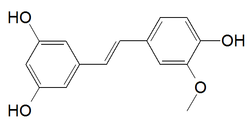
Isorhapontigenin

Norway Spruce

Sitka spruce.

White spruce (Picea glauca)
Therapeutic opportunity:
Given that Natural product Isorhapontigenin has a number of favorable pharmacological health benefits, as discussed above, to human health, it may be a drug candidate of choice to treat Myc-overexpressing tumors. Thus, pharmacological formulations encompassing “Isorhapontigenin or its analogues” may be used to treat N-Myc-overexpressing tumors such as Neuroblastoma and Small cell lung cancer.
Idea Proposed/Formulated (with experimental evidence) by:
Dr L Boominathan Ph.D.
Web: http://genomediscovery.org or http://newbioideas.com
Terms & Conditions apply http://genomediscovery.org/registration/terms-and-conditions/
Citation: Boominathan, L., Natural product therapy for N-Myc-overexpressing tumors: Isorhapontigenin, isolated from Aiphanes Aculeata, and Norway/Sitka/White Spruce, increases the levels of tumor suppressor proteins TAp73, TAp63 and Fbw7, inhibits the expression of pro-survival proteins N-Myc, Cyclin-E and Mcl-1, and stalls the progression of N-Myc-overexpressing cancers via down regulation of its target gene, 7/November/2015, 3.52 pm, Genome-2-Bio-Medicine Discovery center (GBMD), http://genomediscovery.org
Undisclosed information: How Isorhapontigenin increases the expression of tumor suppressors TAp63, TAp63 and Fbw7 and inhibits the expression of Oncoproteins N-Myc, N-cym, Cyclin-E, Mcl-1 and Bcl-2

* Research cooperation
Results guaranteed if not refunded