


What they say:
A recent study from the Institute for Cardiovascular Regeneration, Centre of Molecular Medicine, Frankfurt, Germany shows that “MicroRNA-34a regulates cardiac ageing and function.” This study was published, in the 7 March 2013 issue of of the journal Nature, by Prof Dimmler, Boon, and others.
What we say:
On the foundation of this interesting finding, Dr L Boominathan PhD, Director-cum-chief Scientist of GBMD, reports that: Intracardiac/epicardial injection of Cyclic Helix-B peptide (CHBP) protects against and promotes functional recovery after Myocardial Infarction: CHBP, derived from erythropoietin/hematopoietin, inhibits DNA damage responses, induces telomerase expression, inhibits telomere shortening, and promotes cardiomyocyte survival after myocardial infarction, via up-regulation of its target gene
 [easy_payment currency=”USD”]
From Significance of the study to Public Health relevance:
Given that: (1) cardiovascular disease is the leading cause of death worldwide; (2) the raise of death rate, due to cardiovascular disease, has increased from 123 lakhs in 1990 to 173 lakhs in 2013; (3) 85% of people over 80 years are susceptible to cardiovascular diseases;(4) in India, in 2004, 14.6 lakhs deaths (14% of total deaths) were due to ischemic heart disease; (3) the death due to cardiovascular disease is higher in low-to-middle income countries compared to developed countries; (4) the global economic cost spent in the treatment of cardiovascular disease in 2011 was little more than 10 billion US dollars; (5) an alarming number of people, such as 230 lakhs people, will die from cardiovascular diseases each year by 2030, there is an urgent need to find: (i) a way to induce regeneration of cardiomyocytes that were lost in Myocardial patients; (ii) a cheaper alternative to the existing expensive drugs; and (iv) a side-effect-free Natural product-based drug.
From Research Findings to Therapeutic Opportunity:
This study provides, for the first time, mechanistic insight into how Cyclic Helix-B peptide (CHBP), derived from erythropoietin/hematopoietin, protects against myocardial infarction.
Intracardiac/epicardial injection of Cyclic Helix-B peptide (CHBP), by increasing the expression of its target genes, it may increase the expression of PNUTS (fig.1) . Thereby, it may: (1) inhibit DNA damage responses, (2) increase telomerase expression, (3) inhibit telomere shortening; (4) promote cardiomyocyte survival/regeneration; (5) decelerate aging; and (6) extend lifespan (fig 1).

Figure 1. Cyclic Helix-B peptide (CHBP)-based therapy functions as a Cardioprotective agent. Mechanistic insights into how Cyclin Helix-B peptide (CHBP)-based therapy induces the expression of PNUTS and Telomerase to prevent myocardial infarction and promote Cardiac regeneration/survival
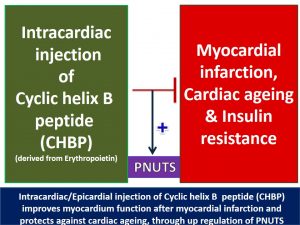
Figure 2. Cyclin Helix-B peptide (CHBP) functions as a cardioprotective agent through induction of PNUTS
Thus, by injecting Cyclic Helix-B peptide (CHBP) into the myocardium of aged cardiac patients, one may prevent ageing-associated (or, stress-associated) decline in cardiac function. Together, this study suggests, for the first time, that CHBP-based therapy may be used to protect against myocardial infarction or improve cardiac function after myocardial infarction (fig. 2).
Details of the research findings:
Idea Proposed/Formulated (with experimental evidence) by:
Dr L Boominathan Ph.D.
Terms & Conditions apply http://genomediscovery.org/registration/terms-and-conditions/
Undisclosed mechanistic information: How does CHBP-based therapy increase the expression of PNUTS/Telomerase?
Amount: $300#
# Research cooperation
For purchase and payment details, you may reach us at admin@genomediscovery.org
References:
Web:http://genomediscovery.org or http://newbioideas.com/
Citation: Boominathan, L., Intracardiac/epicardial injection of Cyclic Helix-B peptide (CHBP) protects against and promoter functional recovery after Myocardial Infarction: CHBP, derived from erythropoietin/hematopoietin, inhibits DNA damage responses, induces telomerase expression, inhibits telomere shortening, and promotes cardiomyocyte survival after myocardial infarction, via up-regulation of its target gene, 31/March/2019, 9.03 am, Genome-2-Bio-Medicine Discovery center (GBMD), http://genomediscovery.org
Courtesy: When you cite drop us a line at admin@genomediscovery.org