

Introduction: What they say:
A study from the Stem Cell Transplantation Program, Division of Pediatric Hematology/Oncology, Boston Children’s Hospital and Dana-Farber Cancer Institute, Boston, Massachusetts, USA shows that “The Lin28/let-7 axis regulates glucose metabolism.” This study was published, in the 30 September 2011 issue of the Journal “Cell” [One of the best journals in Biological sciences with an I.F of 28.71], by Prof and Dean of the Harvard Medical School George Q. Daley, Zhu H, and others.
What we say:
On the foundation of this interesting finding, Dr L Boominathan PhD, Director-cum-chief Scientist of GBMD, reports that: Mechanistic basis as to how yoga, the 5000-year-old ancient Indian way of life, rescues blood sugar disease and diabetes: Yoga therapy increases the expression of IGF1R, INSR, and IRS2, and promotes an insulin-sensitized state, via up-regulation of its target gene Lin28 and down regulation of TXNIP
From significance of the study to Public health relevance:
Given that: (1) more than 387 million people worldwide are affected by Diabetes mellitus (DM); (2) Diabetes is going to be one of the top 10 causes of death by 2030; (3) the life-long painful injection/drug treatment is required to treat DM; (3) the global economic cost spent for diabetes treatment in 2014 was little more than 600 billion US dollars, there is an urgent need to find: (i) a way to induce regeneration of adult ß-cells and cardiomyocytes that were lost in DM (Diabetes Mellitus) and MI (Myocardial infarction), respectively; (ii) a cheaper alternative to the existing expensive weight-loss drugs; (iii) a side-effect-free natural product-based drug; and (iv) a way to cure, not just treat, diabetes.
What is known?
Prof. George Q. Daley and his research team members had shown earlier that the loss of Lin28 in muscles promotes insulin resistance and glucose intolerance.
From Research findings to Therapeutic opportunity:
Yoga is practiced in India for over 7000+ years, however, the mechanistic basis of its therapeutic effect, at the molecular level, in attenuating insulin resistance and the development of diabetes among others, remains largely obscure for centuries.
This study provides, for the first time, mechanistic insights into how yoga therapy, practiced all over the world today, promotes insulin secretion, and insulin sensitivity, and thereby attenuates the development of diabetes.
First, Thioredoxin-interacting protein (TXNIP), one of the top glucose-induced gene, has been shown to promote insulin resistance and cause diabetes, while Lin-28, an RNA binding protein that functions as a reprogramming protein, has been shown to promote insulin sensitivity and promote glucose tolerance.
Second, TXNIP inhibitor has been shown to protect against type I diabetes, while Lin-28 activators have been shown to promote insulin sensitivity.
This study presented here suggests, for the first time, that Yoga therapy, by increasing the expression of its target gene, it may (1) increase the expression of Lin-28; (2) decrease the expression of TXNIP; (3) increase the expression of IGF1R, INSR, and IRS2; (4) enhance tissue repair; (5) promote regeneration of pancreatic β-cells; (6) augment regenerative capacity; (7) promote insulin sensitivity; and (8) protect against dilated cardiomyopathy (DCM) (Fig.1).
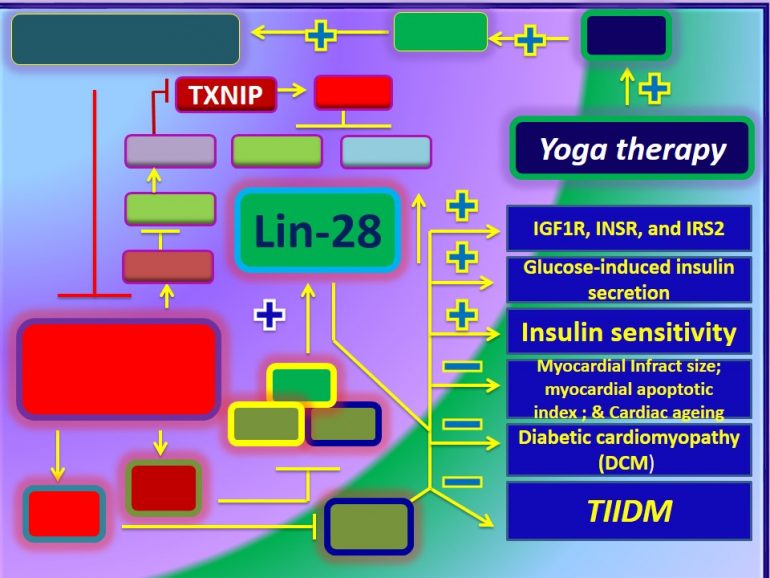
Figure 1. Mechanistic insights into how Yoga therapy functions as an anti-diabetic and cardioprotective agent. Yoga therapy promotes insulin sensitivity and protects against myocardial infarction, via up-regulation of reprogramming protein Lin-28, and down regulation of TXNIP.

Figure 2. Yoga therapy functions as an anti-diabetic agent through induction of reprogramming protein Lin-28
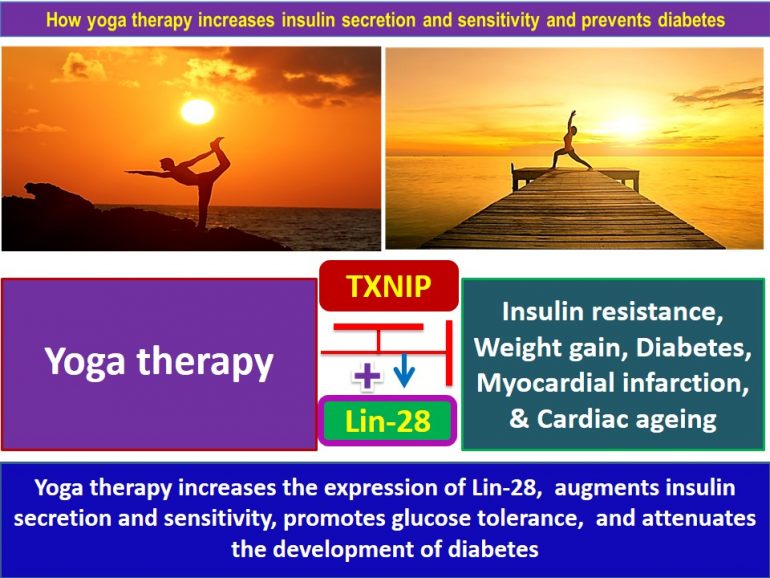
Figure 3. Yoga therapy functions as an anti-diabetic agent through induction of Lin-28 and down regulation of TXNIP.
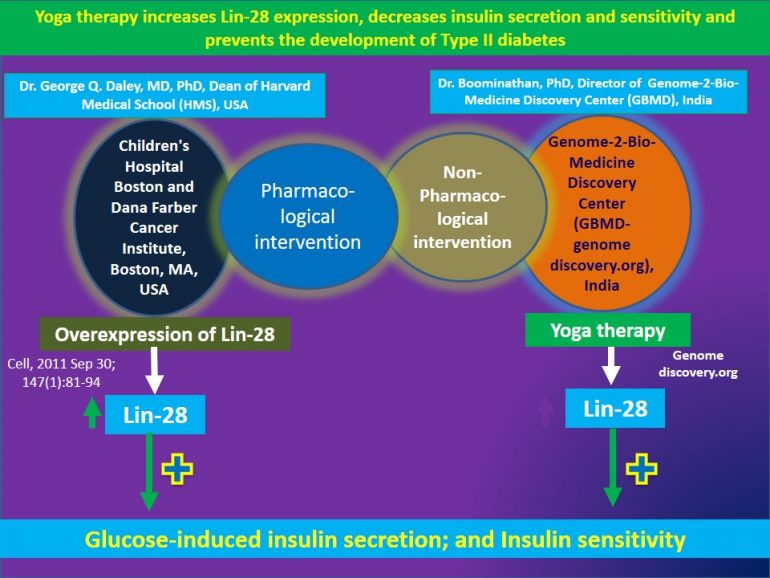
Figure 4. While over expression or activation of Lin-28 increases insulin sensitivity, non-pharmacological (hence, side-effect free) intervention, such as, Yoga therapy, promotes insulin secretion and attenuates insulin resistance, through induction of Lin-28.
Thus, yoga therapy can be used to treat Diabetes. Given the mechanistic basis of yoga therapy, at the molecular level, that was based on proven experimental results, published at the highest level, medical practitioners, & diabetologists may strongly consider recommending their patients to undergo yoga therapy.

Details of the research findings:
Idea Proposed/Formulated (with experimental evidence) by:
Dr L Boominathan Ph.D.
Amount: $ 750#
Terms & Conditions apply http://genomediscovery.org/registration/terms-and-conditions/
Undisclosed mechanistic information: How does Yoga therapy promote insulin-sensitized state?
# Research cooperation
References:
Web: http://genomediscovery.org or http://newbioideas.com/
Citation: Boominathan L, Mechanistic basis as to how yoga, the 5000-year-old ancient Indian way of life, rescues blood sugar disease and diabetes: Yoga therapy increases the expression of IGF1R, INSR, and IRS2, and promotes an insulin-sensitized state, via up-regulation of its target gene Lin28 and down regulation of TXNIP, 22/June/2019, 11.08 pm, Genome-2-BioMedicine Discovery center (GBMD), http://genomediscovery.org
Courtesy: When you cite drop us a line at info@genomediscovery.org